Rapid City, SD Neighborhoods: A Buyer’s Guide to Every Part of the City

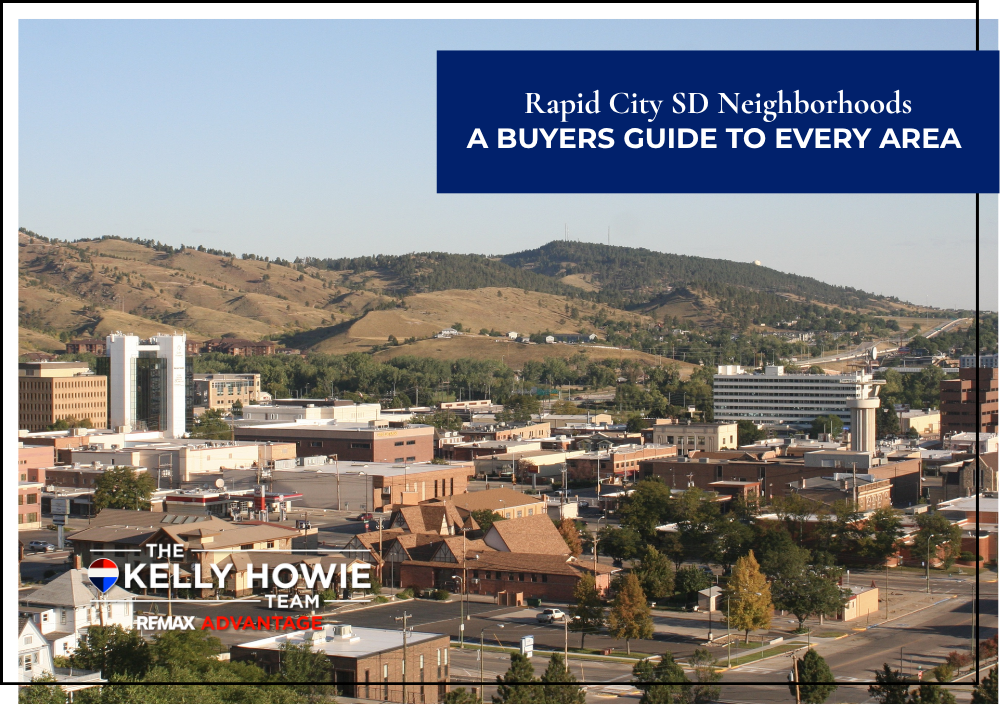
Rapid City neighborhoods vary more than most out-of-state buyers expect. The west side looks and prices completely differently from the north side, and what feels like a short distance on a map can mean a $200,000 difference in home prices and a very different daily commute. 

The average home value in Rapid City is $365,969, up 1.9% over the past year, per Zillow, but that number masks a wide range across different parts of the city. 

If you are evaluating real estate in Rapid City and trying to figure out which neighborhood actually fits your budget and lifestyle, this breaks it down honestly.

The West Side: Black Hills Access and Higher Price Points

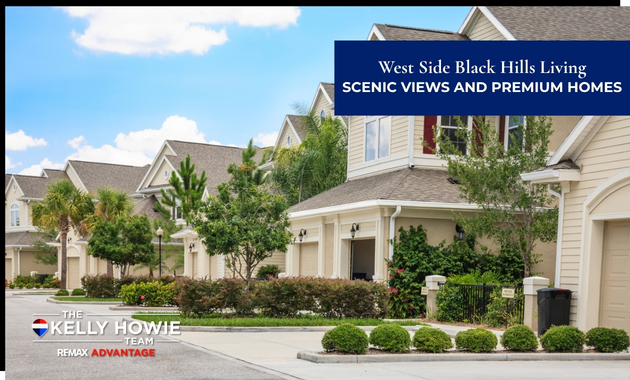
The west side of Rapid City is the most desirable part of the city for buyers seeking proximity to the Black Hills, and prices reflect that. 

Neighborhoods along Sheridan Lake Road, Canyon Lake, and the Copperfield corridor offer custom-built single-family homes on spacious lots with trail access, views of the surrounding terrain, and commutes that put you into the hills within minutes of leaving your driveway.

What homes cost on the west side

Price ranges on the west side run from approximately $400,000 to $850,000 and above depending on the specific neighborhood, lot size, and whether you are looking at an established property or newer construction.

Canyon Lake Drive and the surrounding area tend to command a premium for the combination of lake access, mature landscaping, and proximity to Canyon Lake Park. Sheridan Lake Road properties attract buyers who want larger lots, quick access to Pactola Reservoir and Sheridan Lake, and a more suburban feel while still being inside the city.

Who buys on the west side?

Families with school-age children, buyers relocating from higher cost-of-living markets who want the best the area offers, and buyers who prioritize outdoor lifestyle over commute costs tend to gravitate here. The trade-off is straightforward: you pay more per square foot than anywhere else in Rapid City, and the drive to east side employers or Ellsworth AFB is longer than from other parts of town.

If you want to see what is currently available on the west side, the Kelly Howie Team can walk you through active inventory and what is realistic in your budget.

Downtown and West Boulevard: Historic Homes and Walkability

Downtown Rapid City and the West Boulevard Historic District sit at the cultural core of the city. Main Street Square hosts year-round events, and the neighborhood puts restaurants, galleries, Rapid Creek trails, and the Performing Arts Center within walking distance. 

For buyers who want a genuine sense of place and do not need a large yard, this part of the city delivers something the suburbs do not.

West Boulevard Historic District

West Boulevard is Rapid City’s most architecturally interesting neighborhood. Tree-lined streets, craftsman bungalows, and Victorian-era homes give it a character that newer subdivisions simply cannot replicate. 

Renovated properties here can push into the $500,000 to $800,000 range. Unrenovated homes or smaller units offer entry points from around $200,000, though condition varies significantly and inspection results on older homes in this area can produce surprises.

Downtown living

Downtown proper is a mix of historic homes, modern townhomes, converted properties, and mixed-use buildings. It is the most walkable part of Rapid City and suits buyers who want city convenience over suburban space. 

Prices range widely, from $200,000 for smaller or dated units to $800,000 and above for renovated or commercially viable properties. Rental income potential is a consideration for some buyers in this area given the tourism traffic Rapid City draws.

The South Side: Newer Construction and Family Neighborhoods

South Rapid City is where newer residential development has concentrated over the past decade. Planned communities, modern subdivisions, and larger lots are common here, along with the retail infrastructure that comes with growth: shopping centers, family restaurants, and easy access to major arterials.

What makes the south side work for families

The south side offers a more affordable entry into newer construction than the west side, with mid-range pricing that suits first-time buyers and growing families who want a modern home without the premium of a hills-adjacent address. 

Schools in this part of the city are well rated, and the neighborhood infrastructure is newer and more consistent than what you find in older parts of town.

Price range

South side homes generally span entry-level to mid-range pricing, with larger new builds pushing into the upper $400,000s. The south side is worth a close look for buyers who want more square footage per dollar than the west side offers, and who are willing to trade some Black Hills proximity for a newer home with modern finishes.

North and East Rapid City: Affordable Options and Practical Living

The north and east sides of Rapid City are where the most affordable inventory in the city lives. Older home stock, smaller lots, and a more working-class character define much of this part of town. 

That does not make it a poor choice. It makes it a practical one for buyers on tighter budgets or for investors looking at rental properties close to downtown.

What buyers find here

A mix of older single-family homes, smaller ranches, and some newer infill development makes up most of the north and east side inventory. 

Entry-level buyers can find homes in the $220,000 to $320,000 range here that would be $100,000 to $150,000 more expensive on the west side. The trade-off is older construction that may need updating, and a neighborhood character that varies significantly block by block.

Northeast Rapid City

Northeast Rapid City blends older residential stock with more rural-feeling lots at the edge of the city. Founders Park is nearby, offering over 20 miles of trails. Rapid City Regional Airport is about 12 miles east. For buyers who want space and affordability without going all the way to Box Elder, the northeast corridor is worth considering.

Browse current Rapid City real estate across all price ranges to get a current picture of what is available in each part of the city.

Surrounding Areas Worth Knowing

Not every buyer ends up inside Rapid City proper, and the surrounding areas each have a distinct character worth understanding before you narrow your search.

Box Elder

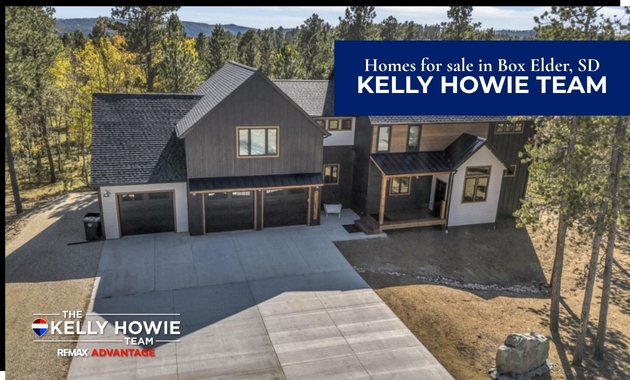
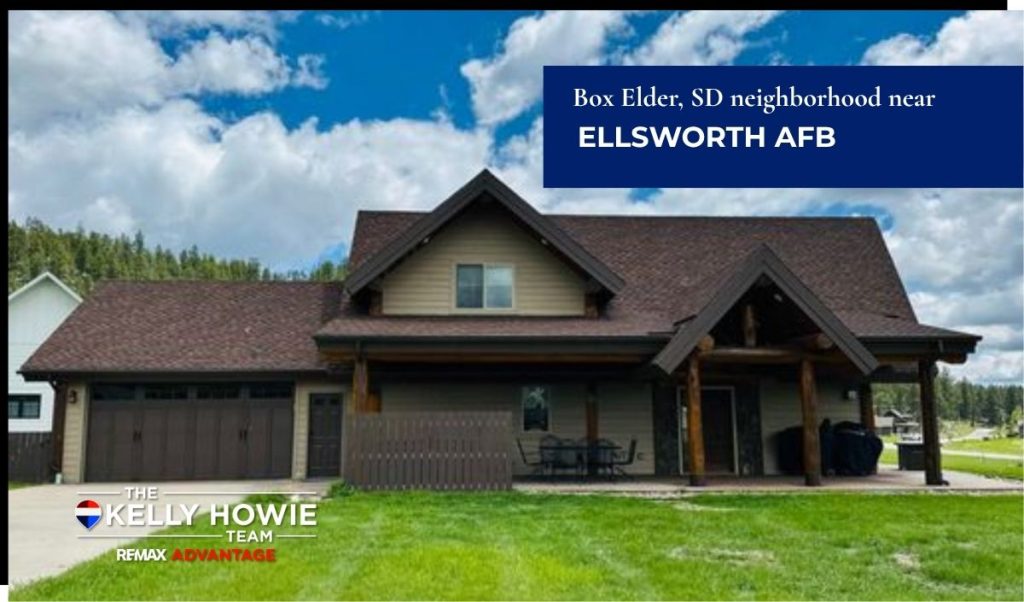
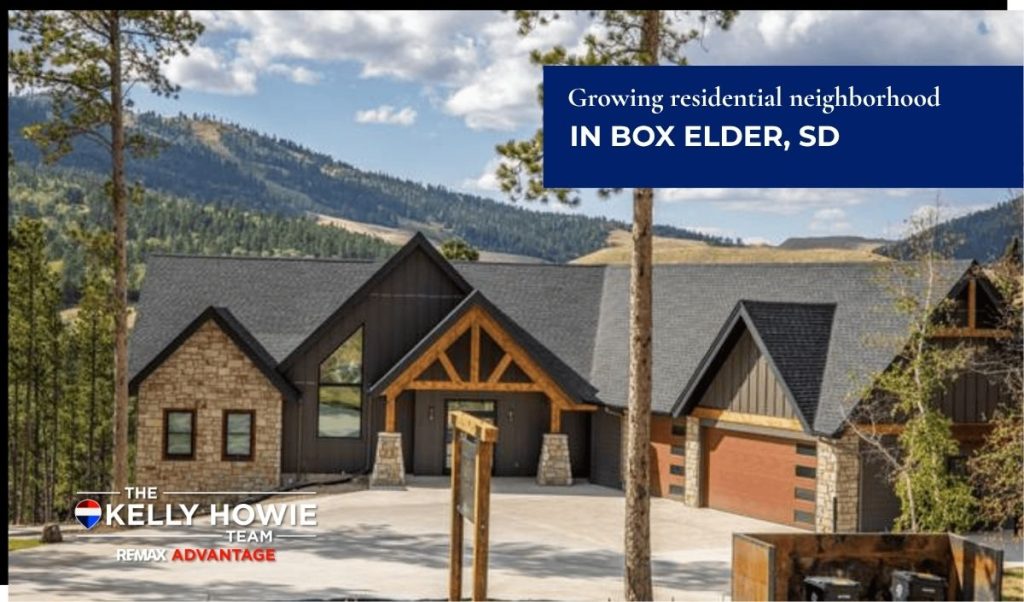
Box Elder sits six miles east along I-90 and is the fastest-growing community in the area, driven by the Ellsworth AFB B-21 Raider expansion. New construction is active across multiple subdivisions at price points starting around $300,000, and the Douglas School District serves most of the community with a B+ rating from Niche. For buyers interested in new builds at prices lower than comparable west-side Rapid City inventory, Box Elder real estate deserves a serious look alongside city options.

Black Hills acreage

Further west, unincorporated Black Hills parcels offer acreage, privacy, and a rural lifestyle that city neighborhoods cannot match. These properties typically run on private wells and septic systems, require different inspection steps, and may need portfolio financing for larger parcels. For buyers whose search includes land as well as homes, the team’s land for sale listings cover the broader region.

NeighborhoodPrice RangeBest ForBlack Hills Access
West Side / Canyon Lake$400k to $850k+Families, professionals, outdoor lifestyleExcellent
West Boulevard Historic$200k to $800k+Character seekers, walkabilityGood
Downtown$200k to $800k+Urban lifestyle, walkabilityModerate
South Rapid City$280k to $500k+Families, newer constructionGood
North / East Rapid City$220k to $380kEntry-level buyers, investorsModerate
Box Elder$300k to $450k+Military families, new constructionLimited

Finding the Right Neighborhood Starts With the Right Conversation

Every buyer prioritizes something different: commute time, school district, proximity to the hills, budget, or the age of the home. 

The Kelly Howie Team knows every part of this market and can help you narrow down which neighborhoods match what you actually need before you spend time touring homes that do not fit. 

Contact the team to start that conversation, or browse our full guide to homes for sale in Rapid City to get a feel for what is available right now across every price range.

Frequently Asked Questions

What is the nicest neighborhood in Rapid City, SD?

The west side, particularly the Canyon Lake and Sheridan Lake Road areas, consistently ranks as the most desirable part of Rapid City based on home values, proximity to the Black Hills, and neighborhood quality. Red Rock Estates near the Red Rock Golf Course is among the most prestigious addresses in the city. Desirability comes at a price: expect to pay $400,000 to $850,000 and above in these areas.

What is the most affordable area in Rapid City, SD?

The north and east sides of Rapid City offer the most affordable inventory in the city, with entry-level homes available from approximately $220,000. Box Elder, six miles east along I-90, also offers newer construction at prices starting around $300,000 that are meaningfully lower than comparable builds on the west side. Both areas have practical commute access to the city and surrounding employers.

Is the west side of Rapid City safe?

The west side of Rapid City is generally considered the safest and most desirable part of the city. Crime rates in the western neighborhoods are lower than the city average, and the area attracts stable long-term residents. As in any city, conditions vary by specific street and block. Reviewing current crime data from the City of Rapid City for specific addresses is always worth doing before making an offer.

What part of Rapid City is best for families?

Families tend to cluster on the west side and south side of Rapid City, where newer construction, larger lots, and higher-rated schools are concentrated. Box Elder is also a strong option for families, particularly those connected to Ellsworth AFB, given the Douglas School District’s B+ rating and its experience with children who move frequently. School district boundaries in Rapid City vary by address, so confirming enrollment zones before buying is important.

This article is for informational purposes only and does not constitute legal or financial advice. Consult a qualified real estate professional and tax advisor for guidance specific to your situation.

Box Elder, SD Real Estate: What Is Driving Growth Near Ellsworth AFB

Box Elder, SD, real estate is growing as Ellsworth Air Force Base expands. The base is transitioning to the B-21 Raider, adding over 3,000 personnel and families to a town of roughly 13,000 people. 

That demand is already showing up in active construction across multiple subdivisions, in a city building its first true downtown, and in home prices that remain lower than in central Rapid City, even as new inventory keeps arriving. 

Whether you are PCSing to Ellsworth or looking at the broader Rapid City real estate market from the outside, Box Elder is worth understanding on its own terms.

What Is Driving the Growth

Ellsworth AFB is transitioning from the B-1B Lancer to the B-21 Raider, the Air Force’s next-generation stealth bomber. 

First delivery is confirmed for 2027, and over $1.6 billion in facility improvements are already underway, including a $129.5 million runway reconstruction completed in December 2025.

The personnel numbers

The South Dakota Legislature’s Select Committee on Ellsworth AFB projects the expansion to bring total base personnel from approximately 10,596 to over 14,000. Every one of those incoming service members and their families needs a place to live, and a significant share of that demand lands in Box Elder.

The population is already moving

Box Elder grew by 21.9% between 2022 and 2024, according to Sean Overeynder, director of community and economic development, who spoke to KOTA TV in April 2025. 

The city is expected to reach 16,000 residents by 2026. For context, most rural South Dakota communities are flat or shrinking. Box Elder is doing the opposite, and the housing market reflects it.

What is being built right now

Annual demand is estimated at 100 to 125 single-family homes for the foreseeable future, according to KOTA TV. Active subdivisions include Freedom Estates, Raider Pointe, Liberty Plaza, Cheyenne Pass, Freedom Landing, Liberty Park, Creekside Estates, and Antelope Ridge. Freedom Landing starts around $300,000. 

Liberty Plaza is the largest project underway, adding homes, apartments, retail, restaurants, and the $12.5 million Liberty Center YMCA, giving Box Elder its first proper downtown.

Box Elder, SD Real Estate What Is Driving Growth Near Ellsworth AFB

What the Market Looks Like for Buyers

Box Elder, SD, real estate is primarily a new construction market right now, which is unusual for a community at this price point. Most markets in the region under $400,000 are dominated by resale. Here, buyers have real choices on floor plans, finishes, and lot selection across several active builders simultaneously.

Price and pace

The median sale price in Box Elder is $353,000, per Homes.com data from April 2025, with homes spending an average of 43 days on the market. 

That is slightly faster than the national average of 46 days, and faster still in the most active subdivisions near the base. The range is wide: entry-level resales and Freedom Landing start under $300,000, while larger new builds with premium finishes in Creekside Estates push past $600,000.

The school district details that most buyers miss

Parts of Box Elder fall under the Douglas School District, rated B+ by Niche, and parts fall under the Rapid City Area School District, rated B-. Douglas is the district that military families consistently prefer. It has deep experience with students transferring mid-year during PCS cycles, and it is receiving significant state and federal investment to expand capacity to meet anticipated enrollment growth. 

Two homes on different streets in Box Elder can have different district assignments. Confirm which district a specific property falls under before making an offer.

Box Elder vs. Rapid City: An Honest Comparison

Military families PCSing to Ellsworth almost always weigh Box Elder against Rapid City. The comparison is worth making clearly, because the right answer depends on what actually matters to your household.

Where Box Elder makes more sense

The commute from most Box Elder neighborhoods to the Ellsworth main gate runs 5 to 10 minutes. New construction is now available at prices that have surpassed comparable builds in central Rapid City. 

The Douglas School District is better matched to the needs of military families. The median age in Box Elder is 30, and the community skews young and family-oriented, which suits many military households well.

Where Rapid City makes more sense

Rapid City has a larger resale inventory, more dining and retail, more established neighborhoods, and a broader urban infrastructure. For buyers who want more of a city feel, for spouses who work in Rapid City, or for families who are not tied to the base commute, Rapid City real estate is likely the better fit. The drive from Rapid City to the Ellsworth main gate is 15 to 25 minutes, depending on the neighborhood, which is not a dealbreaker, but it is a real difference.

The BAH reality

2026 BAH rates at Ellsworth run from $1,800 to $2,538 per month for enlisted members with dependents, and from $2,022 to $2,889 per month for officers, per PCS Pay It Forward. At Box Elder’s median price of $353,000, a VA loan with no down payment puts monthly payments in a range that is workable for most officer grades and senior enlisted, but tighter than buyers often expect. 

Run the actual numbers with a lender before you tour. Factor in utilities, any HOA fees, and heating costs in a South Dakota winter.

FeatureBox ElderRapid City Proper
Median sale priceapprox. $353,000approx. $363,000+
Avg. days on market43 days40 to 41 days
New constructionHigh, multiple active subdivisionsLimited, mostly resale
Commute to Ellsworth5 to 10 minutes15 to 25 minutes
School districtDouglas (B+) or RCAS (B-) by locationRapid City Area Schools (B-)
Median age3036
Ready to Look at Box Elder Real Estate

Ready to Look at Box Elder Real Estate?

Box Elder is changing fast, and knowing which subdivisions have the right school district assignment, infrastructure, and long-term value is exactly what local knowledge brings to that decision. The Kelly Howie Team works with military families and out-of-state buyers across Box Elder and the broader Rapid City real estate markets.

Contact the team to talk through what is available right now.

If you are still weighing the broader area, our guides to homes for sale in Rapid City and whether Rapid City is a good place to live give you the full regional picture alongside what Box Elder specifically offers.

Frequently Asked Questions

Is Box Elder a good place to live near Ellsworth AFB?

For most military families, yes. The commute to the gate is 5 to 10 minutes; the Douglas School District is rated B+ and is built around military family needs; new construction is active at accessible prices; and South Dakota has no state income tax. The honest tradeoff is that Box Elder is a small town with limited dining and retail options compared to Rapid City, which is 10 to 15 minutes away.

How far is Box Elder from Rapid City?

Six miles east along I-90, roughly 10 to 15 minutes under normal conditions. That distance gives residents full access to Rapid City’s hospitals, shopping, and services without the higher cost of living in the city.

What school district is Box Elder, SD in?

Parts of Box Elder fall under the Douglas School District, rated B+ by Niche, and parts fall under the Rapid City Area School District, rated B-. Which district applies depends on the specific property location. Always confirm district assignment before making an offer, particularly if school quality is a priority.

Is it better to buy or rent in Box Elder on a PCS to Ellsworth?

Buying generally makes more sense if you expect to be at Ellsworth three or more years, or if you plan to stay in the area after service. VA loans reduce the entry cost. Renting preserves flexibility for shorter assignments. Either way, run the full monthly cost, including utilities and any HOA fees, and confirm your BAH before committing to a price range.

South Dakota Housing Market: What Buyers and Sellers Should Know Right Now

If you have been watching the South Dakota housing market, you have probably noticed something that feels both encouraging and frustrating.

Compared with many higher-cost states, South Dakota still appears relatively affordable, but in popular areas, the selection can feel tight, and good homes can move quickly. Kelly Howie gives you a plain-language overview of the market.

The big picture of the South Dakota real estate market

When people say “the market,” they often mean prices. In reality, the South Dakota real estate market is shaped by three forces working together:

Inventory: how many homes are for sale at a given time.
Demand: how many buyers are actively looking and able to purchase.
Affordability: the mix of price plus interest rate plus monthly payment.

In recent years, the state’s appeal to retirees, remote workers, and households relocating from higher-cost metros has increased demand in several communities, while construction and available listings have not always kept pace.

That combination is why you may hear locals describe the market as “steady” and still feel competition when you tour homes.

South-Dakota-Housing-Market-Trends

South Dakota home prices: rising, stabilizing, or something else?

It is fair to say South Dakota home prices rose meaningfully over the past several years, then started to behave more “normally” in many segments as buyers adjusted to higher interest rates. “Stabilizing” does not mean prices go down everywhere. It usually means:

  • Fewer bidding wars in some price points, mainly where more inventory exists
  • Buyers are negotiating more often on inspections or credits
  • Homes that are priced correctly still selling, while overpriced homes sit longer

That last point is the most important for both sides. In a steadier market, pricing and presentation start to matter more than momentum.

South Dakota housing market trends that matter most in 2026

You asked for a grounded view without crystal-ball predictions, so think of this as a set of levers that can push the following year in either direction.

1) Out-of-state demand and lifestyle-driven moves

Relocation demand tends to concentrate in places with strong lifestyle pull, job hubs, and recognizable amenities. In South Dakota, that often means the Black Hills, Rapid City, and Sioux Falls.

2) Jobs and economic stability

A stable job environment supports buyer confidence and keeps demand from dropping sharply. South Dakota has frequently ranked among the lowest unemployment states in the U.S., which helps explain why housing demand can stay resilient even when national headlines feel shaky.

3) Interest rates and the monthly payment reality

Even small rate changes can shift what buyers can afford, which then affects seller expectations and time on market. Freddie Mac’s Primary Mortgage Market Survey is a good pulse check for where national mortgage rates are sitting week to week.

4) Limited inventory in specific communities

In many South Dakota markets, the story is not “nobody wants to buy.” It is “not enough of the right homes are available at the same time,” especially in neighborhoods with strong schools, short commutes, or a Black Hills lifestyle premium.

South-Dakota-Housing-Market-Forecast

Rapid City and the Black Hills housing market vs Sioux Falls

South Dakota is not a single, uniform market. Two buyers can have completely different experiences depending on where they focus.

Rapid City housing market and Black Hills housing market

Rapid City often functions as the Black Hills “hub.” You get access to services, employers, and amenities, plus proximity to recreation and tourism-driven demand. The Black Hills can feel competitive for a few reasons:

  • Scenic locations, terrain, and land-use constraints can limit new supply in certain corridors
  • Second-home interest can be higher in lifestyle-forward communities
  • Some buyers prioritize views, acreage, or proximity to trails and attractions, which narrows inventory

If you are looking for Black Hills homes for sale, it helps to treat the search like a set of micro-markets rather than one big map.

Sioux Falls and eastern South Dakota cities

Sioux Falls tends to feel more like a traditional growth metro. Buyers often see more subdivision-style development, broader job concentration, and different commuting patterns. That can translate into:

  • More new-build options depending on location and cycle
  • Different seasonality in inventory
  • A wider spread of neighborhoods with similar housing types

The key takeaway is not that one is “better.” Your strategy should match the market structure.

A simple glossary so the headlines make sense

Inventory: the number of homes available for sale right now. Low inventory usually means fewer choices for buyers.

Days on market: how long a home takes to sell after it is listed. Lower days on market often signals stronger demand or tight supply.

South-Dakota-Home-Prices

Seller’s market vs buyer’s market:

  • Seller’s market means demand is high relative to supply, giving sellers more leverage.
  • Buyer’s market means supply is higher relative to demand, giving buyers more leverage.
    Most South Dakota communities land somewhere in between, and they can shift seasonally.

Is it a good time to buy in South Dakota?

The honest answer depends on your timeline, your payment comfort, and how picky you need to be about location and features. In the current South Dakota housing market, buyers should expect two things at once:

  • More opportunity to negotiate than peak frenzy years in certain segments
  • Competition for well-priced homes in high-demand neighborhoods and lifestyle markets

What helps buyers most right now

  • Get pre-approved early so you can act decisively when the right home appears.
  • Know your “must-haves” vs “nice-to-haves” before touring, because choices can be limited in some Black Hills pockets.
  • Build a plan for inspections and concessions that fits the property type, especially for older homes or acreage.

South Dakota real estate for sellers: what to expect

For sellers, the goal is not to assume the market will do the work for you. The goal is to align your price and presentation with what buyers are actually doing today.

What well-priced homes usually have in common

  • The list price matches recent, realistic comparisons rather than peak-season optimism
  • The home shows clean, cared for, and move-in ready (or it is priced to reflect needed work)
  • The photos and listing details make it easy for out-of-area buyers to understand the layout, access, and lifestyle

What sellers should watch in a steadier market

  • Buyer sensitivity to condition can increase, especially if rates make payments feel tight.
  • “Test pricing” can backfire because buyers often compare days on market when deciding which homes to tour.
  • Small improvements can have outsized impact, but only if they match the buyer profile for your neighborhood.

This is where local context matters. The Kelly Howie Team has long experience in Rapid City and the Black Hills, which helps when pricing depends on things that do not show up neatly in generic online estimates, like terrain, access, views, and neighborhood feel.

How relocating buyers can get oriented fast

If you are considering a move from out of state, you can save time by separating “statewide myths” from neighborhood-level reality. Two guides on the Kelly Howie Team site help with that early-stage homework:

Those pages are especially useful if you are weighing the Black Hills lifestyle against an eastern South Dakota city, or if you are trying to understand weather, commute patterns, and what “close” means in a state with wide-open spacing.

South-dakota-real-estate-market

South Dakota housing market forecast: what could influence the next year

A South Dakota housing market forecast does not need a dramatic prediction to be useful. A reasonable way to think about the next year is to track:

  • Whether more listings come on the market in spring and summer compared to last year
  • Whether mortgage rates drift down, sideways, or up, which affects payment comfort 
  • Whether local job stability remains strong, supporting consistent demand
  • Whether new construction meaningfully adds supply in the specific communities you care about

If those factors move in buyers’ favor, negotiation becomes easier. If they move in sellers’ favor, the best homes will still command strong attention.

Turning market information into a smart next step

In the South Dakota housing market, the “right time” is usually less about headlines and more about fit; fit for your monthly payment, fit for your lifestyle, and fit for how long you plan to hold the home.

For buyers, the advantage comes from clarity and readiness. For sellers, the advantage comes from realistic pricing and strong presentation. Either way, Rapid City and the Black Hills can behave differently than Sioux Falls, so local context is not a bonus; it is part of the strategy.

Kylie McMullin

As a third-generation Realtor who grew up in the Black Hills of South Dakota, I’ve always had a deep appreciation for the beauty and character of our area. I started my real estate career in 2016, working closely with the Owner/Broker of RE/MAX Advantage, and I’ve been passionate about this work ever since. Today, I’m proud to be a leader within a team of talented and driven agents. I love helping clients navigate the buying and selling process, and I’m committed to making every experience smooth, rewarding, and as stress-free as possible.

Whether you’re new to the Black Hills or a lifelong resident, I’m here to help you feel at home.

Kelly Howie

I’m an experienced listing and selling broker with a hands-on, proactive approach to real estate. I work alongside some of the most knowledgeable and trusted agents in the Rapid City area, and together we focus on delivering results that exceed expectations.

Whether you’re buying, selling, or investing, I’m here to anticipate your needs, offer honest advice, and guide you through every step of the process. I take pride in making each transaction smooth and successful, and I’m always ready to help you navigate the local market with confidence.