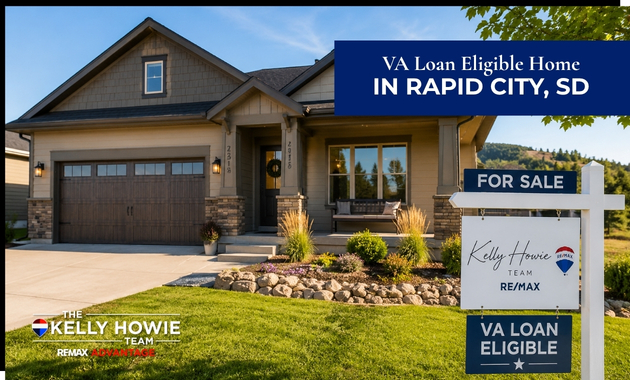
Selected veterans, active-duty service members, and surviving spouses can be eligible for VA loans to buy a home in Rapid City with no down payment and no monthly mortgage insurance.
In 2026, Pennington County agreed to a loan limit that matches the standard conforming limit of $832,750 for veterans with partial entitlement; most VA buyers with full entitlement face no cap. Sellers usually cover up to 4% of the loan in concessions, which is often enough to cover the funding fee.
For buyers relocating to Ellsworth AFB, VA loan homes make one of the more accessible paths into Rapid City real estate, and it’s the financing question our Kelly Howie Team fields daily from relocating military buyers.
How a VA Loan Works for Rapid City Homebuyers
Rapid City buyers can shop rates across banks and mortgage lenders because VA loans are granted by the Department of Veterans Affairs but issued through private lenders, not borrowed directly from the VA.
The core advantages over a conventional loan are:
- No down payment required in most cases, regardless of home price, for buyers with full entitlement.
- No monthly private mortgage insurance (PMI): The VA guarantees up to 25% of the loan to the lender, replacing the PMI required on conventional loans below 20% equity.
- A one-time funding fee instead of PMI, which can be rolled into the loan or paid at closing.
- Seller-paid closing costs, within limits; seller concessions can’t exceed 4% of the loan amount, which can cover the funding fee, prepaid costs, and payoff of certain debts.
A Certificate of Eligibility (COE) is required to use those benefits, and the home must be the buyer’s main residence. You can’t use this type of loan for investment or to buy a second home. If you’re still sorting out orders or a PCS timeline before you’re ready to buy, our Ellsworth AFB relocation guide covers that groundwork separately.
At Kelly Howie’s, we can guide you step by step through the process, find the best options for your budget, and explain all property requirements.
2026 VA Loan Limits and Funding Fees in Pennington County
The 2026 baseline VA loan limit is $832,750 for most U.S. counties, including Pennington County, up 3.3% from $806,500 in 2025. That number matters only for veterans with partial entitlement, meaning they have an existing VA loan or a prior VA foreclosure. If you are a Veteran with full entitlement, you will have no loan limit. They can finance any amount a lender approves with no down payment, which covers most VA buyers in the Rapid City market given local price points. Our team walks buyers through exactly this math before they start touring, since full vs. partial entitlement changes the whole conversation.
The VA funding fee is the other cost unique to this loan type:
- First-time use with no down payment: 2.15% of the loan amount
- Subsequent use with no down payment: 3.30% of the loan amount
- 5% or more down: 1.50%, regardless of prior use
- 10% or more down: 1.25%, regardless of prior use
- If you are a veteran receiving VA disability, you will be exempt from the funding fee entirely.
On a $370,000 Rapid City home close to the area’s recent median sale price, a first-time buyer with zero down would pay roughly $7,955 in funding fees, which can be financed into the loan rather than paid in cash. South Dakota adds two more advantages that don’t show up in the loan paperwork: the state has no income tax, and disabled veterans may qualify for a property tax exemption of up to $150,000 on their primary residence.
Homes That Can Qualify for a VA Loan in Rapid City
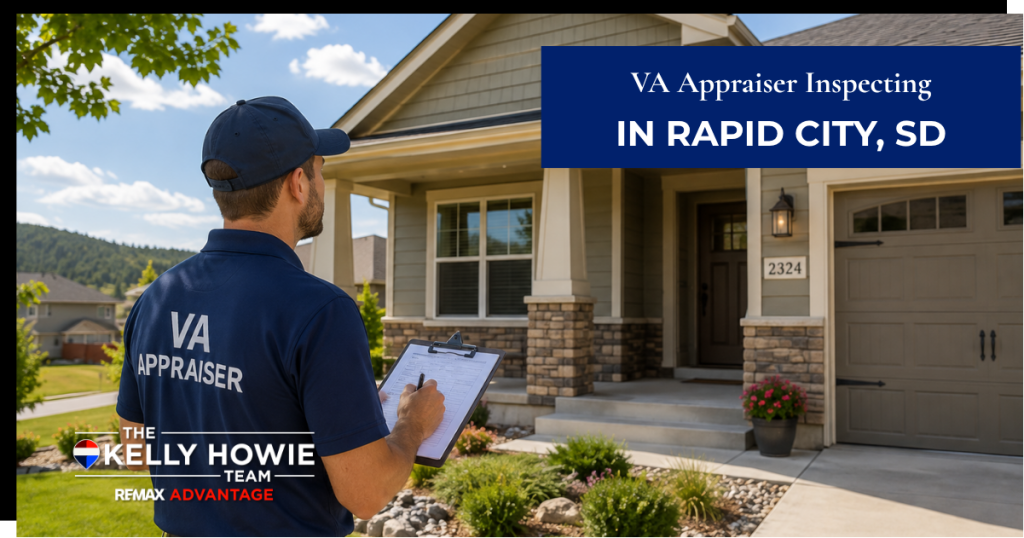
VA loans apply to more property types than buyers often expect. Single-family homes, townhomes, condos in VA-approved developments, and new construction all qualify, as long as the home passes a VA appraisal against the VA’s Minimum Property Requirements (MPRs).
MPRs focus on safety, soundness, and sanitation: a functioning roof, a working heating system, safe water and septic where applicable, and no exposed hazards. A home doesn’t need to be new or high-end, but it does need to be move-in livable. VA appraisers will flag deferred maintenance that a conventional appraisal might overlook.
This matters more in Rapid City than in some markets, since inventory ranges from century-old homes near downtown to new builds in the Sheridan Lake Road corridor and Box Elder.
Older in-town homes can still qualify, but sellers and buyers should expect the VA appraisal to call out anything from a failing furnace to peeling exterior paint before closing can proceed. Our Rapid City neighborhoods guide breaks down which areas tend to have newer, appraisal-friendly inventory versus older homes that may need more scrutiny.
Where VA Buyers Are Purchasing Around Rapid City
Military buyers PCSing to Ellsworth AFB tend to concentrate their search in a few areas for the same reason: commute time to base. Rapid Valley and neighborhoods on the city’s east side sit closest to Ellsworth’s main gate.
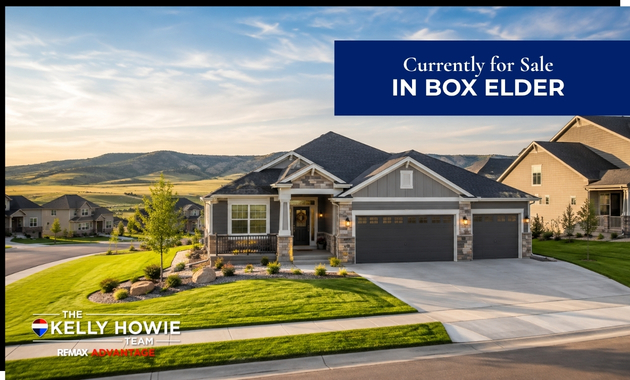
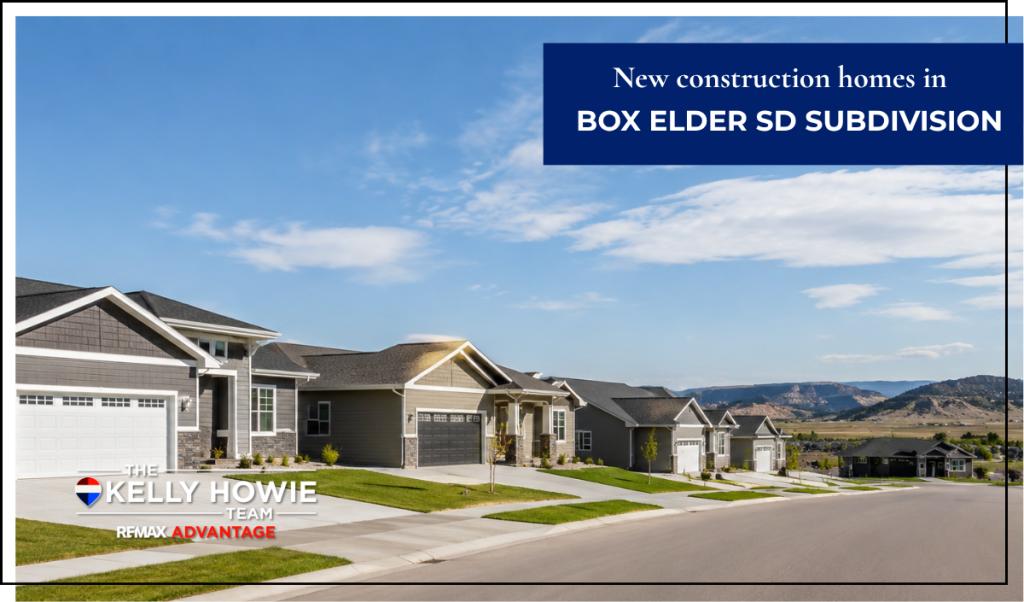
At the same time, Box Elder, just northeast of Rapid City, has grown specifically around proximity to the base and newer construction that tends to pass VA appraisal with fewer issues. For a full breakdown of what’s available in that area, see our guide to homes for sale in Box Elder.
This is where the loan mechanics from the previous sections actually matter most: Box Elder’s newer inventory tends to clear VA appraisal faster than older Rapid City resale, which is worth weighing alongside commute time when you’re deciding where to focus your search.
Get Pre-Approved With a Team That Knows Rapid City VA Buyers
Not every lender or seller responds to a VA offer the same way. Our team works regularly with military buyers relocating to Rapid City, from first VA pre-approval through closing on a home that clears appraisal without last-minute surprises.
If you’re ready to start looking at VA loan homes in Rapid City, contact the team to talk through your entitlement, budget, and timeline before you start touring homes.
FAQ
Yes. You can use VA loan benefits multiple times over a veteran’s lifetime, including after paying off or selling a previous VA-financed home. Reusing the benefit typically means paying the higher “subsequent use” funding fee rate unless you make a down payment of 5% or more.
No, sellers aren’t required to, but many do as part of negotiations. VA rules cap total seller concessions at 4% of the loan amount, which is often enough to cover the funding fee and standard prepaid closing costs in a typical Rapid City transaction.
The VA doesn’t set a minimum credit score; individual lenders do. Most lenders originating VA loans in South Dakota look for a score in the mid-600s or higher, though requirements vary and some lenders work with lower scores on a case-by-case basis.
Yes, with conditions. The home must be permanently affixed to a foundation, meet VA Minimum Property Requirements, and in most cases be classified as real property rather than personal property. Lender overlays vary, so it’s worth confirming eligibility on a specific manufactured home early, before writing an offer.
Veterans with full entitlement have no VA-imposed cap and can borrow what a lender approves with no down payment. Veterans with partial entitlement, from an existing VA loan or a prior VA foreclosure, are subject to county loan limits: $832,750 in Pennington County for 2026.