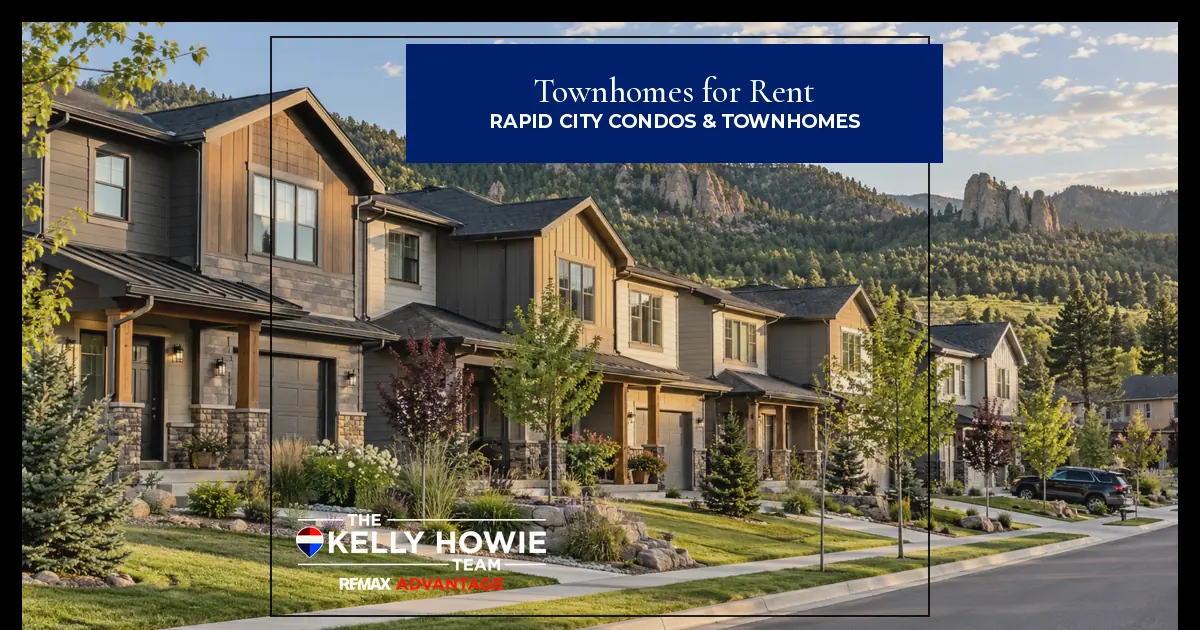
Townhomes and Condos for Rent in Rapid City, SD: Prices, Areas and Lease Tips

Townhomes and condos for rent in Rapid City run around $1,109 a month at the Census median for all rentals, and current asking rents are likely higher. The best areas to search are downtown and West Boulevard, the south side, and Box Elder near Ellsworth AFB.

Renting first is a common way to learn the area before buying, especially for people relocating to the Black Hills or arriving with orders to Ellsworth AFB. At today’s mortgage rates, owning a comparable piece of Rapid City real estate costs about $790 more a month, but it usually pays off if you plan to stay several years.

Key takeaways

  • The Census median is a five-year figure, so expect current asking rents to run higher.
  • Box Elder is the closest option to Ellsworth AFB, about 5 to 10 minutes from the main gate.
  • Buying usually beats renting if you plan to stay several years and can cover the down payment.
  • The Kelly Howie Team sells homes and doesn’t manage rentals, so search listing sites and local property managers.

What Is the Average Rent in Rapid City?

The Census Bureau median gross rent is the best citywide number for Rapid City, covering 2020 to 2024. Gross rent includes basic utilities, which makes it easier to compare against a listing that bundles water or trash.

Why Current Asking Rents Run Higher

Because the Census figure averages five years, it lags the market. If you’re searching for the average rent in Rapid City, SD, treat it as a floor, not a quote.

Rent Benchmarks by Bedroom Size

For a breakdown by unit size, HUD’s Fair Market Rents are the standard public benchmark.

They estimate the 40th percentile of gross rents for standard-quality units in the metro, so use them to sanity-check a listing rather than as an asking price. They also don’t separate townhomes and condos from apartments.

Renting a Townhome vs a Condo

A townhome is an attached home with its own entrance. A condo is a unit inside a larger building. For a renter, the daily differences matter more than the definitions.

Daily Differences for Tenants

  • Shared space. Townhome tenants usually use their own door. Condo tenants share hallways and entries, and often amenities.
  • Outdoor work. In many communities, the HOA covers landscaping, exterior upkeep and snow removal. Whether that carries over to a rental depends on the lease, so ask who handles snow.
  • Rules. Tenants follow the HOA’s rules on pets, parking and guests. Ask for a copy before you sign.

Best Neighborhoods in Rapid City for Townhome and Condo Rentals

The Kelly Howie Team‘s breakdown of Rapid City neighborhoods covers the whole city. Here is how four areas look to a renter. Availability changes weekly, so confirm what’s listed.

Downtown and West Boulevard

This is the city’s most walkable area. Main Street Square hosts year-round events, and restaurants, galleries, Rapid Creek trails and the Performing Arts Center are within walking distance.

The housing mix includes historic homes, modern townhomes, converted properties and mixed-use buildings. In older buildings, ask about heating and windows.
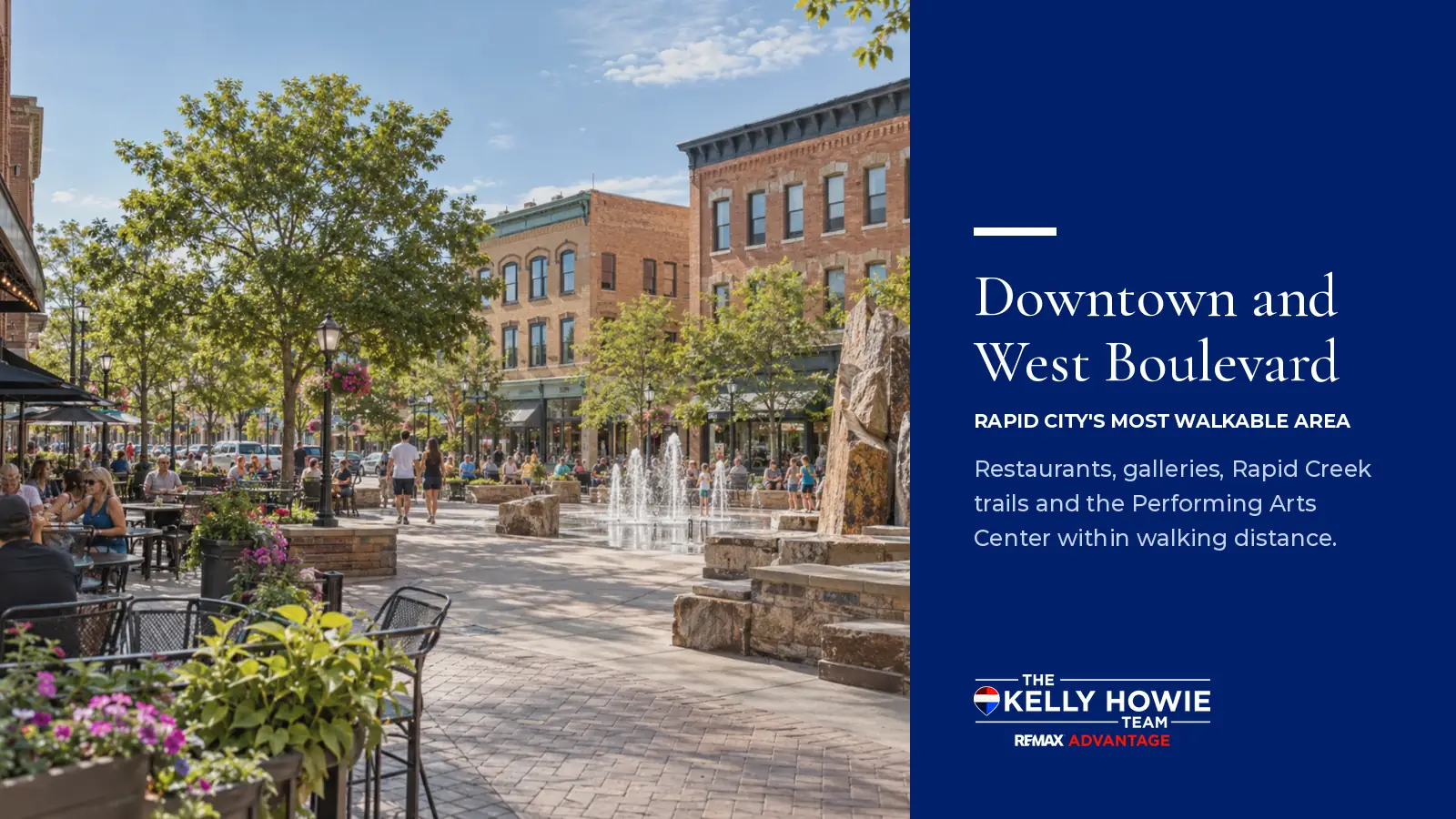
Outdoor dining and fountains on a walkable downtown plaza for renters in Rapid City

West Side

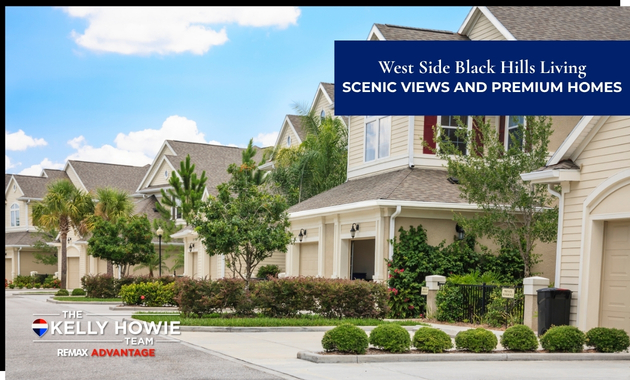
Sheridan Lake Road, Canyon Lake and the Copperfield corridor put you minutes from the Black Hills.

The west side is mostly single-family homes on larger lots, so expect fewer townhome and condo options. The drive to east-side employers and Ellsworth AFB is longer.

South Rapid City

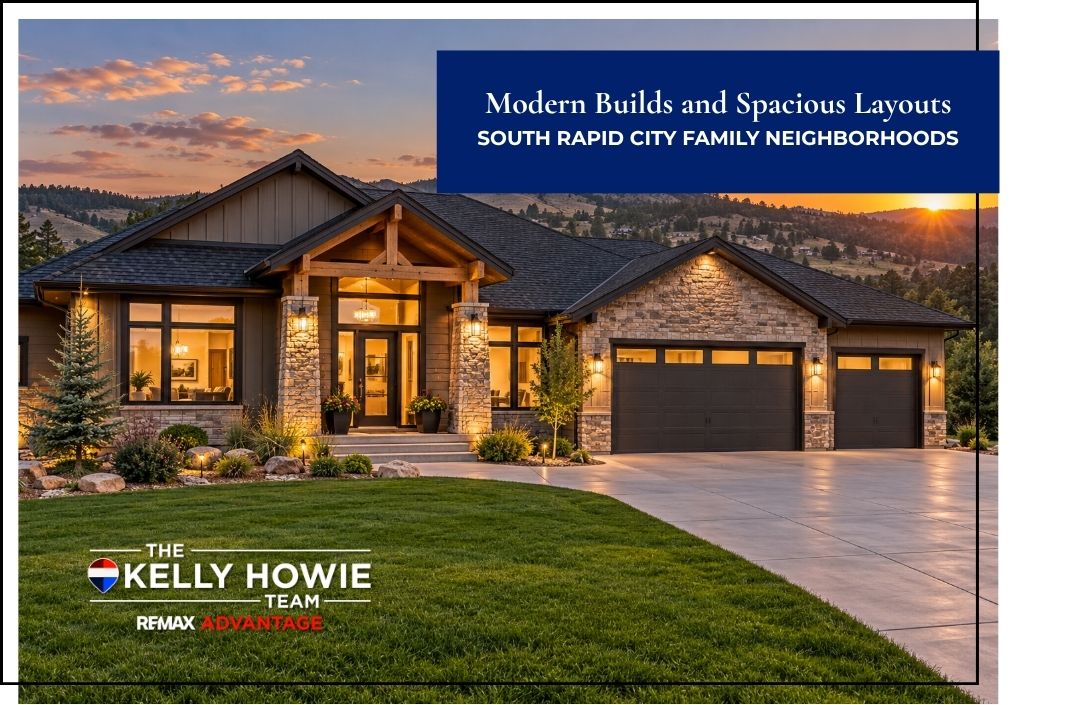
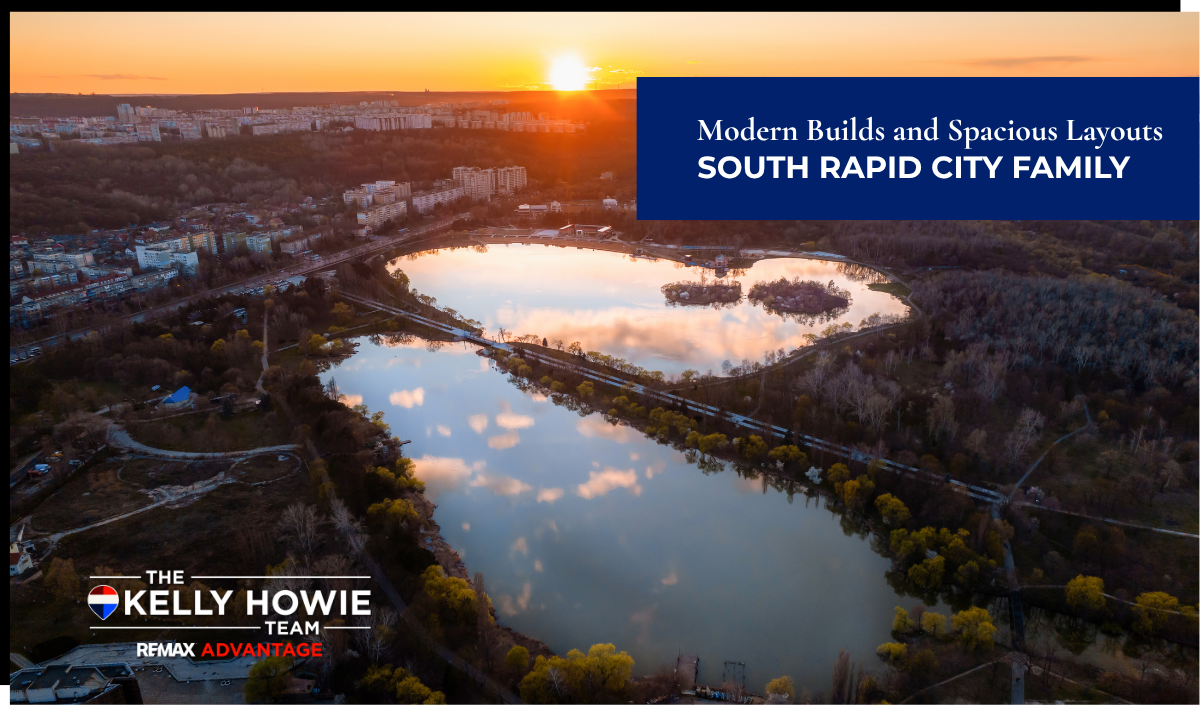
South Rapid City has newer development, with planned communities, modern subdivisions and nearby shopping and restaurants. It suits tenants who want newer finishes and easy errands. Ask which communities have attached units.

Box Elder (Near Ellsworth AFB)

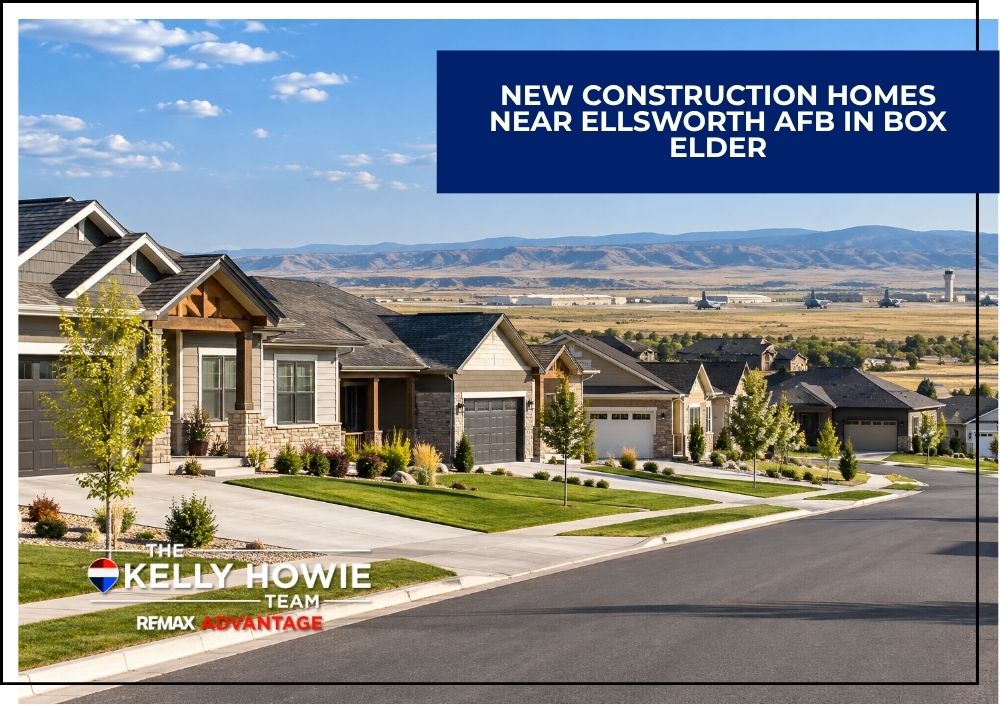
Box Elder sits about six miles east on I-90 and is one of South Dakota’s fastest-growing communities, driven by the Ellsworth B-21 expansion.

It’s the closest option to the base, with a 5- to 10-minute drive to the main gate. Much of Box Elder’s recent growth ties directly to the base.

Where to Find Townhomes and Condos for Rent in Rapid City

The Kelly Howie Team sells homes and doesn’t list or manage rentals, so it can’t point you to specific units. These are the places to look instead.

Where to Search

  • National rental listing sites
  • Local property management company websites
  • “For Rent” signs in the areas above
  • Your employer’s or the base’s relocation office

What to Check in a Lease

Whatever townhomes and condos for rent in Rapid City you find, check these four things before you sign:

  • Total monthly cost. What the rent includes, from water and trash to snow removal, and what a typical winter heating bill looks like.
  • Deposit. South Dakota limits most deposits to one month’s rent, and under a 2026 change to state law the landlord has 21 days after the tenancy ends, once they have your mailing address, to return it or explain in writing what was kept.
  • HOA rules. Pets, parking, guests and any rental restrictions.
  • Lease length. Early-termination terms, in case you find a home to buy before the lease ends.

Rent vs Buy in Rapid City: When Does Owning Make Sense?

Renting and buying a similar townhome look very different on day one and very different five years in.

The Monthly Math

The buying column assumes a $300,000 home, close to the Census median home value of $299,400, with 20% down at Freddie Mac’s 7.32% average 30-year rate (October 22, 2026) and a 1.00% effective property tax rate.

CompareRent a townhomeBuy a townhome
Monthly cost$1,109 (Census median gross rent)About $1,899 for principal, interest and property tax
Up-front cashFirst month plus a deposit of up to one month’s rent$60,000 down plus closing costs
Not includedRenter’s insurance, some utilitiesHomeowner’s insurance, HOA dues, repairs
RepairsThe landlord handles themYou pay (the HOA may cover the exterior)
Payment stabilityCan change at renewalFixed principal and interest; taxes, insurance and dues can change
EquityNoneBuilds with each payment; value can rise or fall
FlexibilityEasy to leave at lease endSelling takes time and costs money

At these assumptions, owning costs about $790 more a month than renting at the median. Rates matter: at 6.19%, the average a year ago, principal and interest on the same loan would be about $181 lower.

When Owning Pays Off

Owning tends to make sense if you plan to stay several years, want a predictable payment and can cover the down payment and closing costs without draining savings. Browse current Rapid City real estate to see what that budget buys.

Buying a Townhome or Condo to Rent Out

Townhomes and condos also draw investors, and many Rapid City communities allow rentals. HOA rules vary from one community to the next, so the rental plan has to fit the bylaws before the numbers matter.

What to Check Before You Buy

  • Rental rules. Minimum lease terms, caps on the number of rented units and any registration the HOA requires.
  • HOA dues. Subtract them, along with taxes and insurance, from the rent you expect to charge.
  • Rent benchmarks. Compare your target rent with HUD’s Fair Market Rents and current listings for similar units.
  • Location. Downtown, the south side and Box Elder near Ellsworth AFB each draw different tenants.

Investors who want more than one unit under a single roof can also look at multi-family homes in Rapid City.

See Townhomes and Condos for Sale in Rapid City

If the numbers have you leaning toward buying, the next step is seeing real listings and a real payment.
Kylie McMullin of the Kelly Howie Team at RE/MAX Advantage in Rapid City

Compare a Payment With Your Rent

Start with the townhomes and condos for sale in Rapid City, which also covers HOA basics. When you’re ready to put a payment next to your rent, reach out to the team and they’ll run the numbers with you.

Rapid City Rental FAQs

How much does it cost to rent a townhome in Rapid City?

The Census Bureau puts Rapid City’s median gross rent at $1,109 a month for 2020 to 2024, including basic utilities. Because it averages five years, current asking rents for townhomes, condos and apartments are likely higher, so treat it as a starting point when you compare listings.

Can I rent out a townhome or condo in Rapid City?

Often, yes. Many Rapid City townhome and condo communities allow rentals, but HOA rules vary and some set minimum lease terms or limit how many units can be rented. Read the bylaws and confirm the rules with the HOA before you buy, not after.

What is the best neighborhood to live in Rapid City, South Dakota?

It depends on your priority. Downtown and West Boulevard are the most walkable, the west side puts you closest to the Black Hills, and the south side has the newest development. Box Elder has the shortest drive to Ellsworth AFB, about 5 to 10 minutes to the main gate.

Which is cheaper to live in, Rapid City or Sioux Falls?

Sioux Falls is slightly cheaper for housing. Census data for 2020 to 2024 shows a median gross rent about $74 lower than Rapid City’s and a median home value of $292,400 versus $299,400. Sioux Falls also has a higher median household income: $75,970 versus $70,870.
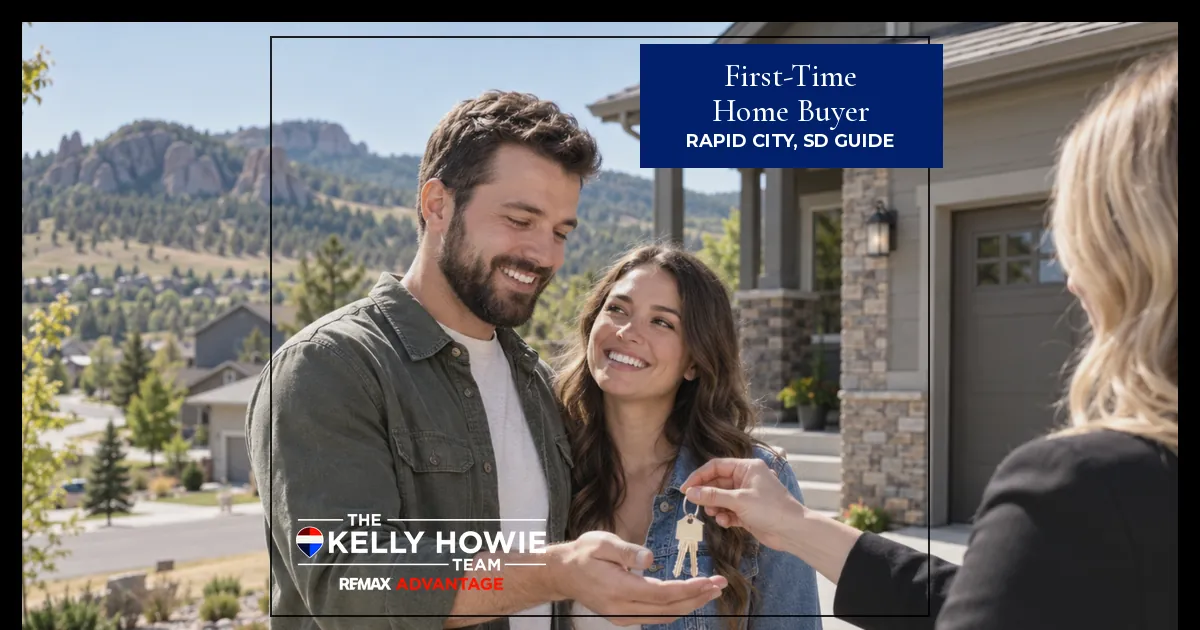
First-Time Home Buyer in Rapid City, SD: Programs, Costs and Steps

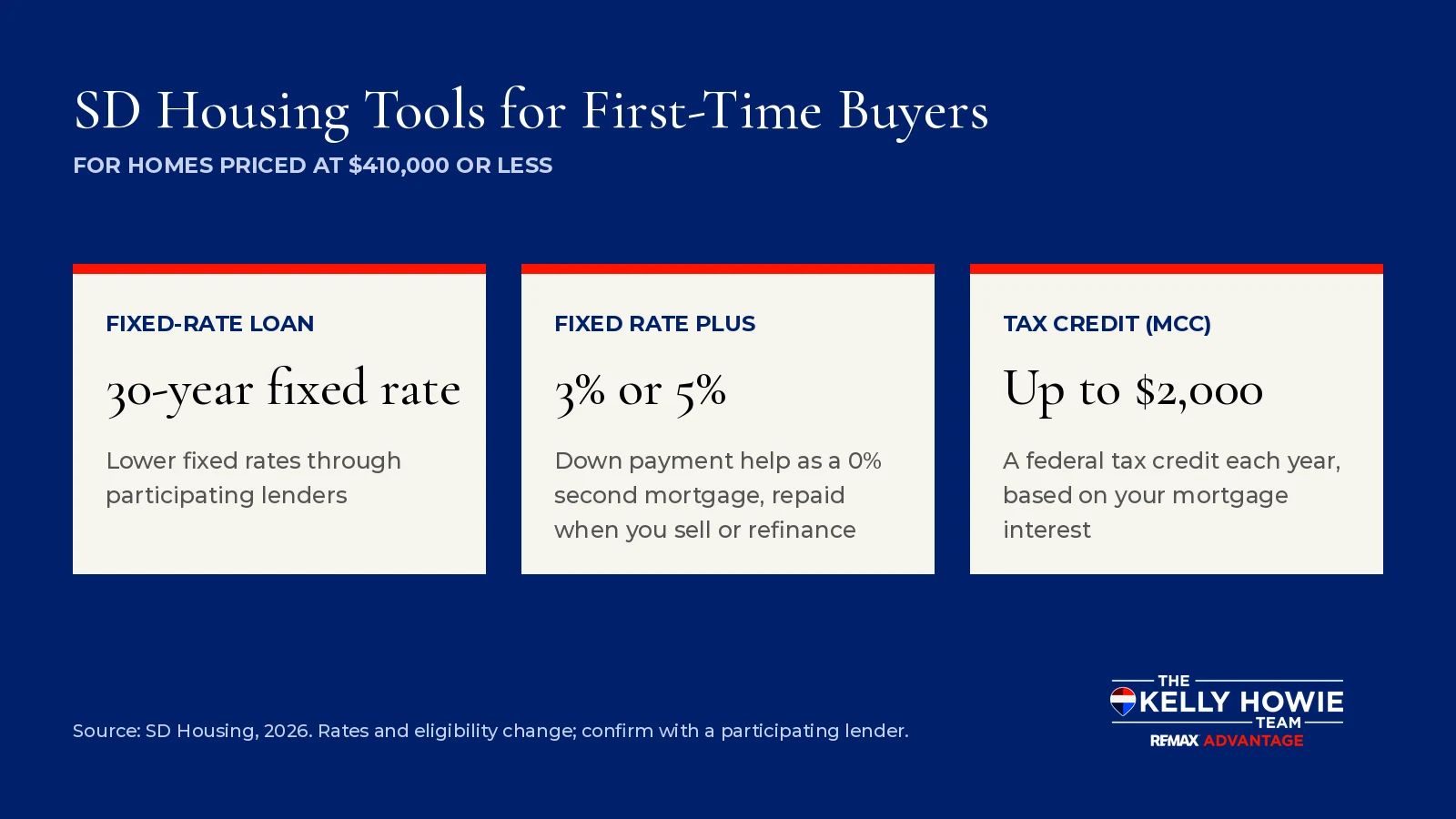
A first-time home buyer in Rapid City, SD is anyone who hasn’t owned a home in the past three years, and South Dakota’s housing agency gives that buyer three main tools: low fixed-rate loans, down payment help of 3% or 5% as a 0% second mortgage, and a federal tax credit of up to $2,000 a year. All three apply to homes priced at $410,000 or less.

With Rapid City’s median home value at $299,400, a large share of Rapid City real estate fits under that cap. The first step is pre-approval with an SD Housing participating lender.

Key takeaways

  • Buying a $300,000 home with 5% down costs about $900 to $1,100 more a month than the median rent at today’s rates.
  • SD Housing’s first-time fixed rates run about $110 to $180 a month below the national average on that loan.
  • Fixed Rate Plus is a 0% loan, not a grant, and you repay it when you sell or refinance.
  • SD Housing sets income limits but publishes no minimum credit score; your lender sets that.

How Much Does a First Home Cost in Rapid City?

Two numbers frame a first-time budget here: what homes are worth and what the monthly payment looks like next to rent.

Rapid City Prices vs the $410,000 Cap

The Census Bureau puts the median value of an owner-occupied Rapid City home at $299,400 for 2020 to 2024, which leaves $110,600 of room under the SD Housing cap.

Because that is a five-year figure, it trails the market, so check current homes for sale in Rapid City to see what sits under the cap today.

Monthly Payment vs Rent

Buying costs more each month than renting right now. SD Housing’s rates narrow the gap but don’t close it. Here is a $300,000 home with 5% down next to the median rent:

OptionRateMonthly payment*More than renting
Rent (Census median gross rent)n/a$1,109n/a
Buy at the national average (Freddie Mac, Oct. 22, 2026)7.32%$2,208+$1,099
SD Housing Fixed Rate, conventional6.750%$2,099+$990
SD Housing Fixed Rate, FHA/VA/USDA6.375%$2,028+$919
SD Housing Fixed Rate Plus 5%, conventional7.375%$2,218+$1,109

*Principal, interest and a 1.00% property tax rate on a $285,000 loan. Excludes mortgage insurance, homeowners insurance and HOA dues. SD Housing rates are from September 29, 2026 and change often.

The program’s fixed rates save about $110 to $180 a month against the national average. Fixed Rate Plus costs about the same each month as a market-rate loan, but it covers $14,250 of up-front costs on this purchase.

South Dakota First-Time Homebuyer Programs

SD Housing, the state housing finance agency, runs four tools a first-time buyer in Rapid City can compare or combine. Each one works through a participating lender, not through the agency directly.

SD Housing first-time homebuyer programs: fixed-rate loans, Fixed Rate Plus down payment help and the MCC tax credit

SD Housing First-Time Homebuyer Program

SD Housing offers 30-year fixed-rate loans through participating lenders. You qualify if you haven’t owned a home in the past three years, your income is at or below its limits, and the price is $410,000 or less.

Living in a mobile home that wasn’t on a permanent foundation doesn’t count as prior ownership, and veterans can ask a lender whether an exception applies. The eligibility rules list every condition. As of September 29, 2026, first-time fixed rates were 6.375% for FHA, VA and USDA loans and 6.750% for conventional.

Fixed Rate Plus Down Payment Assistance

Down payment assistance in South Dakota runs through Fixed Rate Plus. It adds 3% or 5% of your first mortgage as a second mortgage at 0% interest, with no monthly payments and no added fees, repaid when you sell or pay off the loan.

Anyone searching for first-time homebuyer grants in South Dakota should know this is the closest SD Housing offers, and it is a loan, not a grant. The trade-off is a higher first-mortgage rate: 7.125% or 7.375% on a conventional loan.

Mortgage Credit Certificate (Tax Credit)

The Mortgage Credit Certificate turns part of your yearly mortgage interest into a federal tax credit. SD Housing’s tax credit brochure caps it at $2,000 a year, with a $250 fee when paired with the first-time program; lenders may add up to $250. MCC loans use the repeat-buyer rate column, 7.750% for conventional.

On the $285,000 loan above, that’s about $193 more a month against a credit worth up to $167 a month, so ask your lender to run it both ways. Selling within nine years can trigger a federal recapture tax, and SD Housing reimburses what you actually pay.

FHA, VA and USDA Loans

SD Housing offers all three as government loan types. FHA allows a lower down payment and more flexible credit. VA gives eligible veterans, service members and surviving spouses no down payment and no monthly mortgage insurance.

USDA serves eligible rural areas. Ellsworth AFB households can compare their options with VA loan homes in Rapid City.

Income Limits and Credit Requirements in South Dakota

Two things decide whether the first-time program fits: your household income and the credit profile your lender will accept.

Income Limits

SD Housing sets a maximum income by county and household size in its income limits PDF. It counts annualized gross income from all sources, so overtime, bonuses and commission count too.

Credit Score and Down Payment

SD Housing doesn’t publish a minimum credit score for the first-time program. Your lender reviews credit, income and debt, and each loan type sets its own floor. The down payment depends on the loan:

  • FHA: starts at 3.5% down.
  • Conventional: as little as 3% down on many programs.
  • VA and USDA: no down payment for eligible buyers.

How to Buy Your First Home in Rapid City, Step by Step

Buying a house in Rapid City follows the same path for most first-timers, and it mirrors the statewide process for buying a house in South Dakota.

Seven Steps From Budget to Keys

  1. Check your finances. Look at your credit, debt-to-income ratio and savings.
  2. Take homebuyer education. SD Housing partners offer a free course online, one-on-one or in a group.
  3. Get pre-approved. Pick an SD Housing participating lender.
  4. Choose an area. Compare price and commute across Rapid City neighborhoods.
  5. Hire a buyer’s agent. The Kelly Howie Team offers no-pressure buyer consultations.
  6. Make an offer and inspect. Inspection periods of about 10 days are typical here.
  7. Close and get your keys.

What Surprises First-Time Buyers on Tours

Many first-time buyers don’t expect how common finished basements and below-grade living space are in Rapid City, and that space is often a way to get more square footage within a budget.

Price can surprise buyers too. Two homes with similar square footage can sell for very different amounts depending on the neighborhood, condition and location within the Black Hills. More of these Black Hills home buying surprises show up once you start touring.

How Much Should You Save After Buying a House?

The down payment isn’t the last check you write. Plan for upkeep from the first year.

Keep a Repair Fund

Fannie Mae suggests setting aside 1% to 4% of your home’s value each year for maintenance, and more for homes over 30 years old. Keep it separate from your emergency savings.

  • $300,000 home: $3,000 to $12,000 a year.
  • $410,000 home (the SD Housing cap): $4,100 to $16,400 a year.

Talk to a Rapid City Buyer’s Agent

A lender tells you what you qualify for. An agent tells you what that buys.

Kelly Howie, Rapid City buyer's agent with the Kelly Howie Team at RE/MAX Advantage

Turn a Pre-Approval Into a Shortlist

The Kelly Howie Team can show you how a first-time budget plays out across Rapid City real estate, from townhomes to single-family homes. When you’re ready to compare your rent with a real payment, reach out to the team.

First-Time Homebuyer FAQs

What grants are available for first-time homebuyers in South Dakota?

SD Housing doesn’t offer a true grant. Its closest option is Fixed Rate Plus, a 0% second mortgage worth 3% or 5% of your loan with no monthly payments, repaid when you sell or refinance. The Mortgage Credit Certificate adds a federal tax credit of up to $2,000 a year.

What is the minimum income to qualify for first-time home buyers?

SD Housing sets a maximum income, not a minimum. Your lender decides what you can afford by reviewing your income, credit and debt. For the limit, SD Housing counts annualized gross income from all sources, and the cap depends on your county and household size.

What is the income limit for low-income housing in South Dakota?

It depends on the program, county and household size. HUD defines low income as 80% of area median income and publishes limits by metro area and county. SD Housing’s first-time program uses its own limits, so check your household against them and ask your lender which applies.

I have good credit. Where do I start as a first-time buyer?

Start with SD Housing’s eligibility rules and its free homebuyer education course. Then get pre-approved by a participating lender so you know your budget. After that, talk with a local buyer’s agent about which Rapid City neighborhoods fit your payment and what your budget buys right now.

Best Neighborhoods Near Ellsworth AFB

Box Elder is closest to Ellsworth’s main gate, with just a 5- to 10-minute commute; this is where most military families end up when commute time is the top priority.

Rapid Valley and Rapid City itself run 10 to 20 minutes out, with more established resale inventory and in-town amenities.

Sturgis and other Meade County towns sit 20 to 30 minutes away, trading commute time for larger lots and lower prices. Which neighborhood is “best” really depends on whether you’re optimizing for commute, price, school district, or space; this guide breaks down the actual trade-offs.

Box Elder: Closest Commute to Ellsworth’s Main Gate

Box Elder is closer to the border of Ellsworth, making it the shortest commute to the main gate at 5 to 10 minutes for most neighborhoods in the area. It’s also where most new construction near the base is happening right now, with several active subdivisions and entry-level new builds starting around $300,000.

The trade-off is that most of Box Elder falls under the Douglas School District, but not all of it; some streets fall under Rapid City Area Schools instead, so confirming district assignment for any specific property matters before making an offer.

Our full Box Elder buyer’s guide covers current pricing and subdivisions in more depth, since availability changes quickly.

Our latest military family chose our Rapid City area even if it meant an extra 5-minute drive, since it’s very well located; the commute to almost anywhere is very short compared to the cities they came from. 

Rapid Valley and Rapid City: More Established, Still Close

Rapid Valley is 15 to 20 minutes from the main gate if you go via Ellsworth Road, and Rapid City itself is  10 to 15 minutes out along I-90. Both trade a few extra commute minutes for a larger resale inventory, the more established neighborhoods, and easier access to in-town amenities than Box Elder offers for now.

This is also where buyers can get the most neighborhood-to-neighborhood variation in price and character.

Our Rapid City neighborhoods guide breaks down how areas like Canyon Lake, North Rapid City, and the Sheridan Lake Road corridor compare on price, lot size, and commute specifically. For military buyers using VA financing, our guide to VA loan homes in Rapid City covers how loan limits and funding fees apply across this wider search area.

Summerset, Sturgis, and Meade County: Space Over Commute

For our families who prioritize space and price over commute time, Meade County towns like Sturgis sit roughly 20 to 30 minutes from Ellsworth, with Summerset landing in a similar range.

These communities trade a longer drive for larger lots, lower price points, and a quieter, more small-town character than either Box Elder or central Rapid City.

This option tends to appeal most to families with a spouse working outside the immediate base area, or those who prioritize acreage and a slower pace over shaving a few minutes off the daily commute.

Why Gate Hours Matter for Where You Live

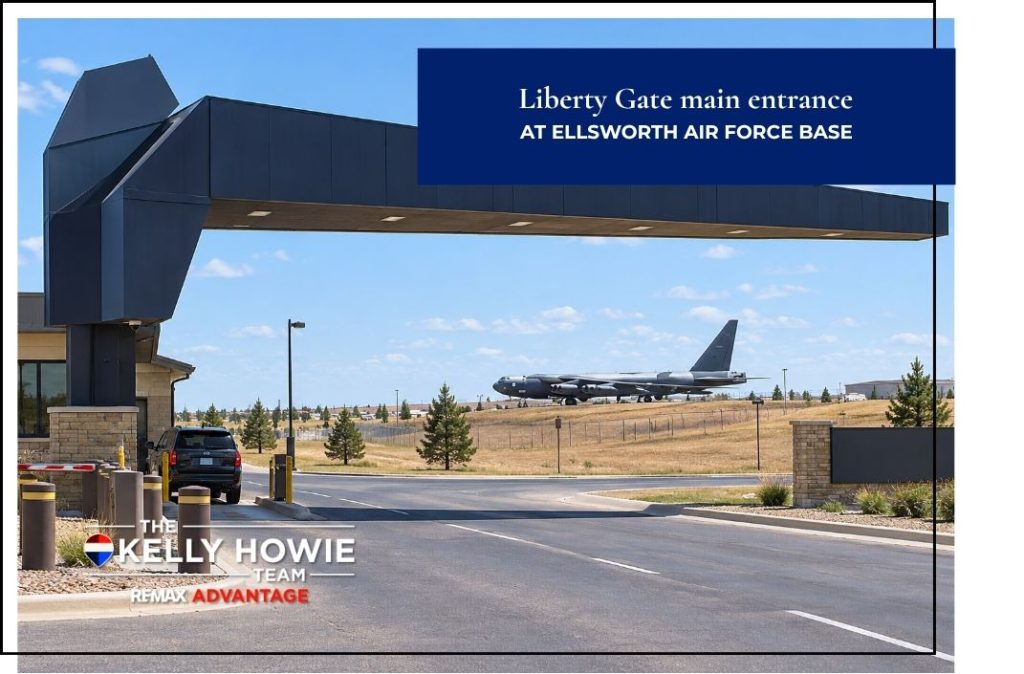
Commute distance isn’t the only factor; which gate you’ll actually be using matters just as much, especially for anyone working shift hours. Ellsworth’s Liberty Gate is guarded around the clock and is the only gate open 24 hours a day, seven days a week. The Bismarck and Patriot Gates, by contrast, are restricted to weekday daytime hours and aren’t available for after-hours or weekend access.

In practice, that means anyone working nights, weekends, or on an unpredictable flight schedule needs to route through Liberty Gate regardless of which neighborhood they live in, which narrows the practical commute-time advantage of living close to Bismarck or Patriot specifically.

Our Ellsworth AFB relocation guide covers on-base housing, BAH, and the rest of the PCS timeline in more depth if you’re still early in the planning process.

Find the Right Neighborhood for Your Commute

Every family gives different importance to commute, price, and space; the “best” neighborhood near Ellsworth really depends on which of those matters most to you. Kelly Howie Team works with military families relocating to Ellsworth regularly, comparing real listings across Box Elder, Rapid Valley, and Rapid City against your specific timeline and budget.

Contact the team to start narrowing down which neighborhood actually fits your PCS timeline.

What is the closest neighborhood to Ellsworth AFB?

Box Elder is the closest, sitting directly adjacent to the base with most neighborhoods within a 5- to 10-minute drive of the main gate. It’s also where most current new-construction inventory near the base is concentrated, giving buyers real choice in floor plan and finishes.

How far is Rapid City from Ellsworth AFB?

Rapid City is usually from  10 to 15 minutes from Ellsworth’s main gate via I-90; it depends on where in the city you are. It offers a larger resale inventory and more established neighborhoods than Box Elder in exchange for a slightly longer commute.

Are all the gates at Ellsworth AFB open 24/7?

No. Only the Liberty Gate operates 24 hours a day, seven days a week. The Bismarck and Patriot Gates are restricted to weekday daytime hours, so after-hours and weekend traffic must use Liberty Gate, regardless of which neighborhood you live in.

Is Box Elder or Rapid City better for military families?

It depends on priorities for you and your family. Box Elder offers a shorter commute and newer home inventory. Meanwhile, Rapid City offers more resale options, more amenities, and neighborhood variety, but with a slightly longer drive to the base; It really depends on what matters most to your family.

How far is Sturgis from Ellsworth AFB?

Sturgis is 20 to 30 minutes from Ellsworth’s main gate if you take  I-90. Families choose this area when they want to prioritize larger lots, lower prices, and small-town character over minimizing commute time.

Rapid City, SD Cost of Living: What to Expect

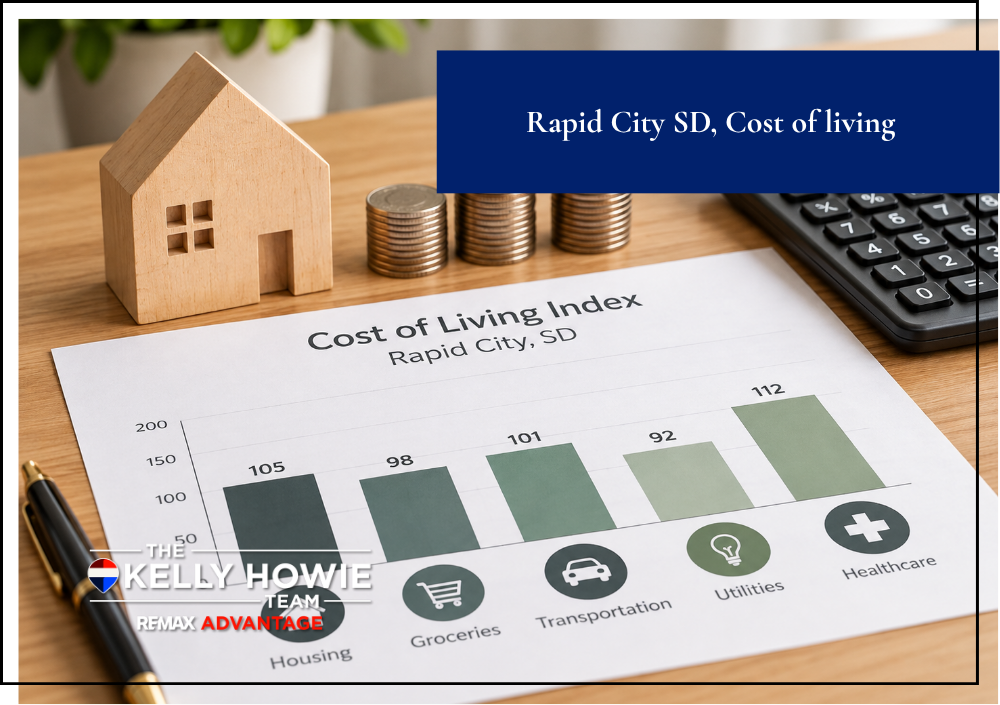
Rapid City’s overall cost of living runs a little below the national average, with housing and utilities costing less than in most U.S. cities. In contrast, groceries and healthcare run a bit higher.

The single biggest factor working in residents’ favor doesn’t show up in a standard cost-of-living index: South Dakota has no state income tax, which meaningfully increases take-home pay compared to most states buyers are relocating from.

Between lower housing costs and no income tax, many newcomers find their money goes further here than the raw index score suggests, a comparison our Kelly Howie Team regularly walks relocating buyers through.

Rapid City, SD Cost of Living What to Expect

Rapid City’s Overall Cost of Living

On BestPlaces’ cost-of-living scale, 100 represents the national average. Rapid City scores 97.8, meaning it costs about 2.2% less to live here than in the average U.S. city and roughly 9.5% less than the South Dakota average overall.

That single number hides a lot of variation, though  costs aren’t evenly lower across every category:

  • Housing and utilities tend to run below the national average, the single largest factor keeping the overall index down.
  • Groceries run slightly above the national average, a common pattern in smaller inland markets without the distribution scale of larger metros.
  • Healthcare costs also tend to run higher than the national average, which is worth factoring in for anyone weighing a move that includes retirement or ongoing medical care.
  • Transportation costs land close to the national average, with no major toll roads or unusually long commute times pulling the number in either direction.

Although our clients tend to notice immediate changes in their cost of living with groceries and utilities, one of their favorite things is getting to work more easily and in less time.

Housing Costs in Rapid City

Housing is usually where Rapid City’s cost of living shows up, and where buyers feel it fastest.

Our Rapid City neighborhoods guide covers how prices vary block by block across the city, from more affordable in-town options to newer construction on the west side.

When our buyers prioritize new construction, they often look at eat of Box Elder; our guide to homes for sale in Box Elder covers pricing and subdivisions there specifically. Either way, housing costs here remain meaningfully lower than what buyers relocating from major metro areas on either coast are typically used to paying.

Taxes in South Dakota: The Best Advantage

Most cost-of-living comparisons focus on groceries, gas, and rent, and even though those are advantages we all love, South Dakota has no state income tax, so you keep more of every paycheck here than you would in most other states, regardless of your salary. That advantage still applies even in the categories where Rapid City costs a bit more than average, like groceries and healthcare.

That doesn’t mean South Dakota is tax-free across the board, though:

  • The state sales tax rate is 4.2%, with an average combined state and local rate of 6.11% once local rates are added, below the national average.
  • South Dakota’s effective property tax rate runs about 1.00% on owner-occupied housing, close to the national average.
  • South Dakota has no estate or inheritance tax, which matters more to some relocating retirees than any single monthly expense.

For our veterans, there’s an additional layer worth knowing: disabled veterans may qualify for a property tax exemption of up to $150,000 if it’s their primary residence; we cover this detail in more depth in our guide to VA loan homes in Rapid City.

Rapid City’s Costs VS Income

Rapid City’s median household income runs around $70,870, which is somewhat below the national median.

Although on its own, that number sounds like a tighter budget than the cost-of-living index implies, the actual day-to-day affordability gap is smaller than comparing raw income figures suggest, thanks to no state income tax and below-average housing 

Rapid City’s population has grown to roughly 78,000 residents in recent years; this is a sign that the combination of housing costs, no income tax, and job market conditions is drawing people in rather than pushing them out, even with grocery and healthcare costs running above the national average.

Would You Like to Relocate to Rapid City?

Cost-of-living numbers are only a part of the story; the rest depends on which neighborhood, price range, and commute fit your budget and lifestyle.

Our team walks relocating buyers through exactly that math daily, comparing take-home pay, housing costs, and neighborhood options side by side rather than relying on a single index score.

Contact us to talk through what your specific budget looks like in Rapid City.

Is Rapid City, SD affordable to live in?

Generally, yes. Rapid City’s overall cost of living runs slightly below the national average, mainly because housing and utility costs are lower, though groceries and healthcare run somewhat higher than average. Combined with no state income tax, many residents find their money stretches further than the raw index suggests.

What is the average cost of living in Rapid City, SD?

Rapid City scores about 2.2% below the national average on the widely used BestPlaces cost-of-living index, and roughly 9.5% below the South Dakota state average. Housing is the biggest factor keeping that number down, while groceries and healthcare run slightly above the national average.

Does South Dakota have a state income tax? 

No. One of our favorite things about South Dakota is that it’s one of a small number of states with no personal income tax, so residents keep more of their paycheck than in most states. Instead, the state relies more heavily on sales and property taxes to fund public services.

Is rent more expensive in Rapid City compared to other cities?

Not really! It usually runs below the national average. Rent levels vary by neighborhood and property type, it’s always worth comparing current listings and not just relying on a single citywide average.

How does Rapid City’s cost of living compare to Denver or other nearby cities?

Rapid City is way less expensive than major Western metro areas like Denver, especially on housing costs, and it also has no state income tax. For buyers relocating from a higher-cost metro, the combined effect on take-home budget is often larger than the headline cost-of-living index alone suggests.

VA Loan Homes in Rapid City, SD: A Buyer’s Guide

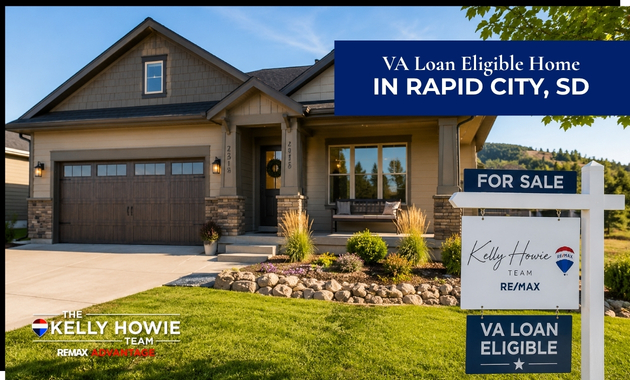
Selected veterans, active-duty service members, and surviving spouses can be eligible for VA loans to buy a home in Rapid City with no down payment and no monthly mortgage insurance.

In 2026, Pennington County agreed to a loan limit that matches the standard conforming limit of $832,750 for veterans with partial entitlement; most VA buyers with full entitlement face no cap. Sellers usually cover up to 4% of the loan in concessions, which is often enough to cover the funding fee. 

For buyers relocating to Ellsworth AFB, VA loan homes make one of the more accessible paths into Rapid City real estate, and it’s the financing question our  Kelly Howie Team fields daily from relocating military buyers.

How a VA Loan Works for Rapid City Homebuyers

Rapid City buyers can shop rates across banks and mortgage lenders because VA loans are granted by the Department of Veterans Affairs but issued through private lenders, not borrowed directly from the VA. 

The core advantages over a conventional loan are:

  • No down payment required in most cases, regardless of home price, for buyers with full entitlement.
  • No monthly private mortgage insurance (PMI): The VA guarantees up to 25% of the loan to the lender, replacing the PMI required on conventional loans below 20% equity. 
  • A one-time funding fee instead of PMI, which can be rolled into the loan or paid at closing.
  • Seller-paid closing costs, within limits; seller concessions can’t exceed 4% of the loan amount, which can cover the funding fee, prepaid costs, and payoff of certain debts.

A Certificate of Eligibility (COE) is required to use those benefits, and the home must be the buyer’s main residence. You can’t use this type of loan for investment or to buy a second home. If you’re still sorting out orders or a PCS timeline before you’re ready to buy, our Ellsworth AFB relocation guide covers that groundwork separately.

At Kelly Howie’s, we can guide you step by step through the process, find the best options for your budget, and explain all property requirements. 

2026 VA Loan Limits and Funding Fees in Pennington County

The 2026 baseline VA loan limit is $832,750 for most U.S. counties, including Pennington County, up 3.3% from $806,500 in 2025. That number matters only for veterans with partial entitlement, meaning they have an existing VA loan or a prior VA foreclosure. If you are a  Veteran with full entitlement, you will have no loan limit. They can finance any amount a lender approves with no down payment, which covers most VA buyers in the Rapid City market given local price points. Our team walks buyers through exactly this math before they start touring, since full vs. partial entitlement changes the whole conversation.

The VA funding fee is the other cost unique to this loan type:

  • First-time use with no down payment: 2.15% of the loan amount
  • Subsequent use with no down payment: 3.30% of the loan amount
  • 5% or more down: 1.50%, regardless of prior use
  • 10% or more down: 1.25%, regardless of prior use
  • If you are a veteran receiving VA disability, you will be exempt from the funding fee entirely.

On a $370,000 Rapid City home close to the area’s recent median sale price, a first-time buyer with zero down would pay roughly $7,955 in funding fees, which can be financed into the loan rather than paid in cash. South Dakota adds two more advantages that don’t show up in the loan paperwork: the state has no income tax, and disabled veterans may qualify for a property tax exemption of up to $150,000 on their primary residence.

Homes That Can Qualify for a VA Loan in Rapid City

VA loans apply to more property types than buyers often expect. Single-family homes, townhomes, condos in VA-approved developments, and new construction all qualify, as long as the home passes a VA appraisal against the VA’s Minimum Property Requirements (MPRs). 

MPRs focus on safety, soundness, and sanitation: a functioning roof, a working heating system, safe water and septic where applicable, and no exposed hazards. A home doesn’t need to be new or high-end, but it does need to be move-in livable. VA appraisers will flag deferred maintenance that a conventional appraisal might overlook.

This matters more in Rapid City than in some markets, since inventory ranges from century-old homes near downtown to new builds in the Sheridan Lake Road corridor and Box Elder. 

Older in-town homes can still qualify, but sellers and buyers should expect the VA appraisal to call out anything from a failing furnace to peeling exterior paint before closing can proceed. Our Rapid City neighborhoods guide breaks down which areas tend to have newer, appraisal-friendly inventory versus older homes that may need more scrutiny.

Where VA Buyers Are Purchasing Around Rapid City

Military buyers PCSing to Ellsworth AFB tend to concentrate their search in a few areas for the same reason: commute time to base. Rapid Valley and neighborhoods on the city’s east side sit closest to Ellsworth’s main gate. 

At the same time, Box Elder, just northeast of Rapid City, has grown specifically around proximity to the base and newer construction that tends to pass VA appraisal with fewer issues. For a full breakdown of what’s available in that area, see our guide to homes for sale in Box Elder.

This is where the loan mechanics from the previous sections actually matter most: Box Elder’s newer inventory tends to clear VA appraisal faster than older Rapid City resale, which is worth weighing alongside commute time when you’re deciding where to focus your search.

Get Pre-Approved With a Team That Knows Rapid City VA Buyers

Not every lender or seller responds to a VA offer the same way. Our team works regularly with military buyers relocating to Rapid City, from first VA pre-approval through closing on a home that clears appraisal without last-minute surprises.

 If you’re ready to start looking at VA loan homes in Rapid City, contact the team to talk through your entitlement, budget, and timeline before you start touring homes.

FAQ

Can you use a VA loan more than once?

Yes. You can use VA loan benefits multiple times over a veteran’s lifetime, including after paying off or selling a previous VA-financed home. Reusing the benefit typically means paying the higher “subsequent use” funding fee rate unless you make a down payment of 5% or more.

Do sellers have to pay closing costs on a VA loan? 

No, sellers aren’t required to, but many do as part of negotiations. VA rules cap total seller concessions at 4% of the loan amount, which is often enough to cover the funding fee and standard prepaid closing costs in a typical Rapid City transaction.

What credit score do you need for a VA loan in South Dakota? 

The VA doesn’t set a minimum credit score; individual lenders do. Most lenders originating VA loans in South Dakota look for a score in the mid-600s or higher, though requirements vary and some lenders work with lower scores on a case-by-case basis.

Are manufactured or modular homes eligible for a VA loan in Rapid City? 

Yes, with conditions. The home must be permanently affixed to a foundation, meet VA Minimum Property Requirements, and in most cases be classified as real property rather than personal property. Lender overlays vary, so it’s worth confirming eligibility on a specific manufactured home early, before writing an offer.

Is there a maximum amount you can borrow with a VA loan? 

Veterans with full entitlement have no VA-imposed cap and can borrow what a lender approves with no down payment. Veterans with partial entitlement, from an existing VA loan or a prior VA foreclosure, are subject to county loan limits: $832,750 in Pennington County for 2026.

Homes for Sale in Box Elder, SD

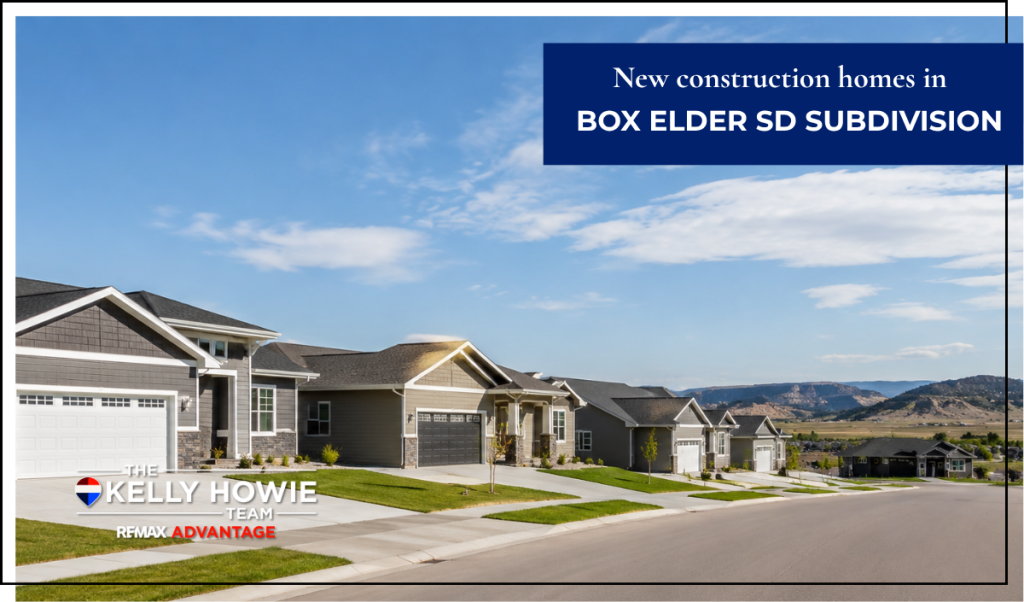
Box Elder’s for-sale market is unusual for a city at its price point: most of what’s available is new construction rather than resale. The median sale price runs around $353,000, with recent median list prices closer to $385,000 and premium new builds past $600,000 in Box Elder’s newer subdivisions. 

Buyers here choose between several active subdivisions rather than picking through a thin resale market, which is a genuinely different shopping experience than house-hunting in central Rapid City, one the Kelly Howie Team tracks closely, subdivision by subdivision.

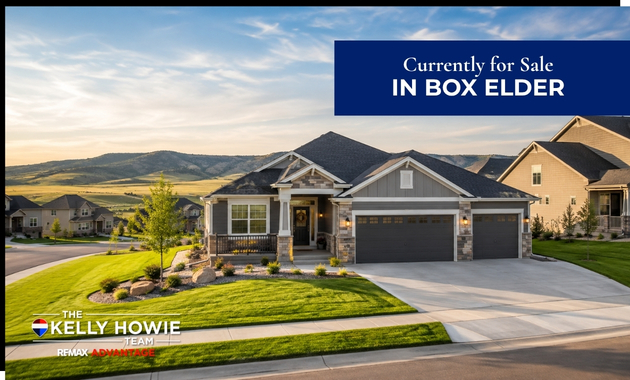
Currently for Sale in Box Elder

Active subdivisions right now include Freedom Estates, Raider Pointe, Liberty Plaza, Cheyenne Pass, Freedom Landing, Liberty Park, Creekside Estates, and Antelope Ridge, each at a different price point and stage of build-out. 

Liberty Plaza is the largest project underway, adding single-family homes, apartments, retail and restaurant space, and a new YMCA, giving Box Elder its first real downtown rather than just residential subdivisions.

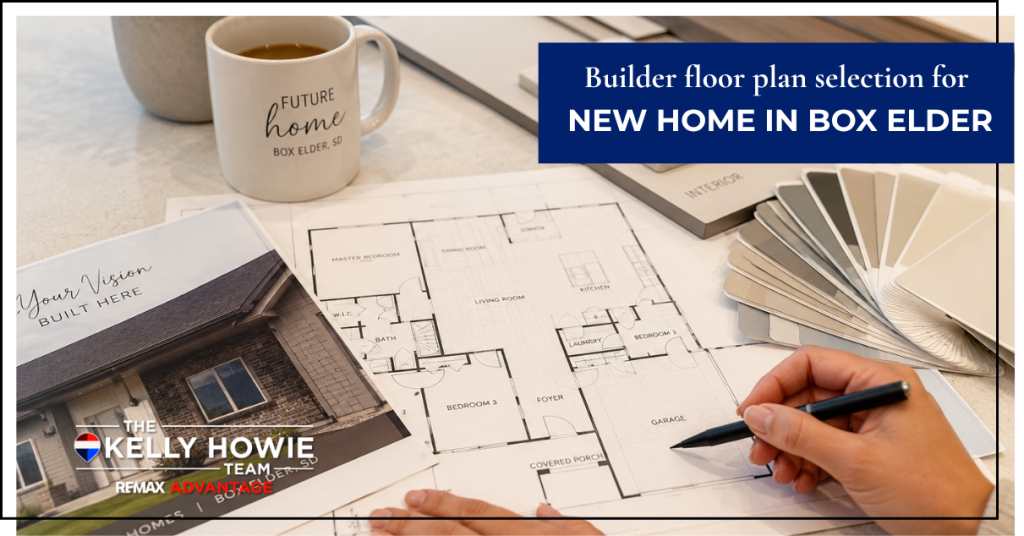
Because so much of the market is new construction, buyers often have real choices on floor plan, lot, and finish selection across multiple builders at once, something that’s harder to find in a comparable resale-dominated market.

Recent listings have included homes under $800,000 across the Ellsworth, Southeast Connector, Airport Neighborhood, and Elk Vale Road areas, showing how spread out the current inventory is across the city. For the fuller story on what’s fueling that growth, see our Box Elder real estate guide.

Right now, buyers’ favorites are centered on homes near Ellsworth Air Force Base, while modern new construction in Liberty Park has become popular too; rural acreage properties offering extra space for shops and RV parking are also a point of interest lately. 

Box Elder Home Prices by Range

Box Elder’s price spread is wide enough that “median price” alone doesn’t tell buyers much.

  • Under $300,000: Freedom Landing offers new homes starting around $300,000, one of the more accessible entry points into new construction in the area.
  • $275,000- $ 375,000: Midcentury modern resale homes in Box Elder’s established streets have recently sold in this range.
  • $350,000 – $450,000 is the range where most new ranch-style and two-story builds currently land across the active subdivisions.
  • $500,000 – $ 675,000+ and larger new builds with premium finishes, particularly in Creekside Estates, have pushed into this upper range.

At Box Elder’s median price, homes have also been moving at a steady pace rather than sitting on the market, a sign of the demand new-base personnel and relocating buyers are putting on inventory here. You can browse current Box Elder listings to see where today’s inventory falls across these ranges.

New Construction vs. Resale in Box Elder

Because new construction makes up such a large share of what’s for sale, buying in Box Elder often looks different from a typical resale purchase:

  • New builds frequently involve choosing a lot and floor plan before the home is finished, sometimes reserving a spot in an upcoming phase rather than touring a finished house.
  • Builder timelines vary by subdivision and phase, so a home listed as “for sale” may have a completion date rather than an immediate move-in date.
  • Resale homes, more common on Box Elder’s established streets, offer faster closings and more room to negotiate on price, but far less selection in layout and finish.

Buyers weighing VA financing should also confirm early which properties and builders work smoothly with VA appraisals. Our guide to VA loan homes in Rapid City explains the process in more detail.

How Box Elder Compares to Rapid City Neighborhoods

Box Elder is just east of Rapid City, and buyers weighing both areas usually compare new-construction selection and commute times against Rapid City’s broader resale inventory and in-town amenities.

If you want to check the breakdown of how Rapid City’s neighborhoods compare on price and lifestyle, you can read our Rapid City neighborhoods guide.

Start Your Box Elder Home Search

New listings in Box Elder are moving really fast, so a listing from last month could already be gone, but our team tracks active subdivisions, builder timelines, and resale listings across Box Elder daily.

This will help you compare what’s actually available against your budget and checklist before you start touring.

Contact the team to get a current list of homes for sale in Box Elder that match what you’re looking for.

FAQ

What is the median home price in Box Elder, SD? 

Recent data say Box Elder’s median sale price is around $353,000; list prices trend closer to $385,000 as new inventory comes to market. Prices can vary widely by subdivision, but they usually start under $300,000 for entry-level new construction and can go over $600,000 for new builds with premium features.

Are most homes for sale in Box Elder new construction?

A large share of current inventory is new construction, spread across several active subdivisions rather than concentrated in one area. This is unusual for a market at this price point, where resale typically dominates, and it gives you more choice in floor plan and finishes than a resale-heavy market would.

Which Box Elder subdivisions have the most homes for sale right now? 

Freedom Landing, Creekside Estates, Liberty Plaza, Raider Pointe, and Cheyenne Pass are among the most active subdivisions currently building and selling. Each targets a different price point, from entry-level new construction in Freedom Landing to premium finishes in Creekside Estates, so it’s worth touring more than once before deciding.

What school district will my Box Elder home be in? 

Box Elder is split between the Douglas School District and the Rapid City Area School District, and the assignment depends on the specific property location rather than the subdivision as a whole. Confirm the district assignment for any home you’re seriously considering before making an offer.

How fast are homes selling in Box Elder?

Homes in Box Elder are generally sold at a steady pace, particularly in the most active subdivisions closest to Ellsworth AFB. Pricing and presentation can affect how quickly an individual listing moves, especially for resale homes competing against new construction.

Rapid City, SD Neighborhoods: A Buyer’s Guide to Every Part of the City

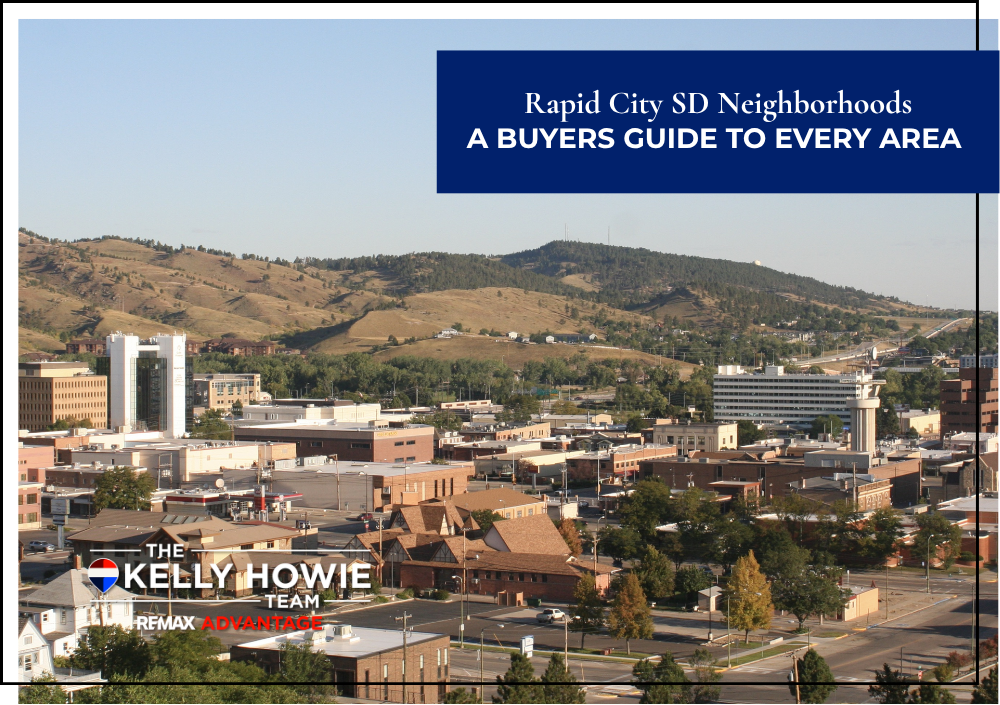
Rapid City neighborhoods vary more than most out-of-state buyers expect. The west side looks and prices completely differently from the north side, and what feels like a short distance on a map can mean a $200,000 difference in home prices and a very different daily commute. 

The average home value in Rapid City is $365,969, up 1.9% over the past year, per Zillow, but that number masks a wide range across different parts of the city. 

If you are evaluating real estate in Rapid City and trying to figure out which neighborhood actually fits your budget and lifestyle, this breaks it down honestly.

The West Side: Black Hills Access and Higher Price Points

The west side of Rapid City is the most desirable part of the city for buyers seeking proximity to the Black Hills, and prices reflect that. 

Neighborhoods along Sheridan Lake Road, Canyon Lake, and the Copperfield corridor offer custom-built single-family homes on spacious lots with trail access, views of the surrounding terrain, and commutes that put you into the hills within minutes of leaving your driveway.

What homes cost on the west side

Price ranges on the west side run from approximately $400,000 to $850,000 and above depending on the specific neighborhood, lot size, and whether you are looking at an established property or newer construction.

Canyon Lake Drive and the surrounding area tend to command a premium for the combination of lake access, mature landscaping, and proximity to Canyon Lake Park. Sheridan Lake Road properties attract buyers who want larger lots, quick access to Pactola Reservoir and Sheridan Lake, and a more suburban feel while still being inside the city.

Who buys on the west side?

Families with school-age children, buyers relocating from higher cost-of-living markets who want the best the area offers, and buyers who prioritize outdoor lifestyle over commute costs tend to gravitate here. The trade-off is straightforward: you pay more per square foot than anywhere else in Rapid City, and the drive to east side employers or Ellsworth AFB is longer than from other parts of town.

If you want to see what is currently available on the west side, the Kelly Howie Team can walk you through active inventory and what is realistic in your budget.

Downtown and West Boulevard: Historic Homes and Walkability

Downtown Rapid City and the West Boulevard Historic District sit at the cultural core of the city. Main Street Square hosts year-round events, and the neighborhood puts restaurants, galleries, Rapid Creek trails, and the Performing Arts Center within walking distance. 

For buyers who want a genuine sense of place and do not need a large yard, this part of the city delivers something the suburbs do not.

West Boulevard Historic District

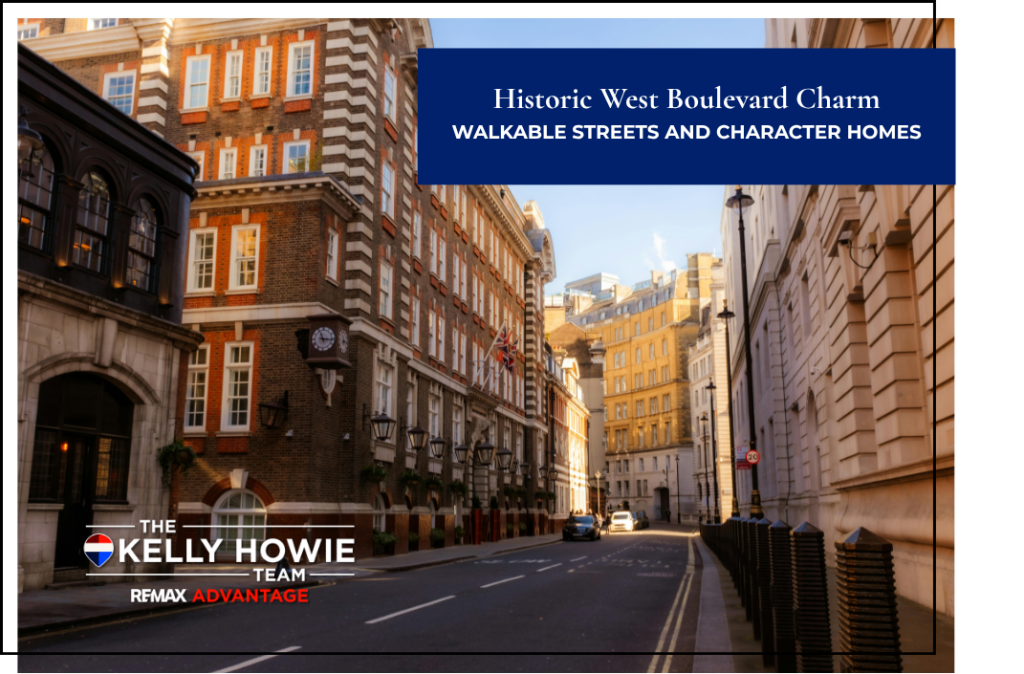
West Boulevard is Rapid City’s most architecturally interesting neighborhood. Tree-lined streets, craftsman bungalows, and Victorian-era homes give it a character that newer subdivisions simply cannot replicate. 

Renovated properties here can push into the $500,000 to $800,000 range. Unrenovated homes or smaller units offer entry points from around $200,000, though condition varies significantly and inspection results on older homes in this area can produce surprises.

Downtown living

Downtown proper is a mix of historic homes, modern townhomes, converted properties, and mixed-use buildings. It is the most walkable part of Rapid City and suits buyers who want city convenience over suburban space. 

Prices range widely, from $200,000 for smaller or dated units to $800,000 and above for renovated or commercially viable properties. Rental income potential is a consideration for some buyers in this area given the tourism traffic Rapid City draws.

The South Side: Newer Construction and Family Neighborhoods

South Rapid City is where newer residential development has concentrated over the past decade. Planned communities, modern subdivisions, and larger lots are common here, along with the retail infrastructure that comes with growth: shopping centers, family restaurants, and easy access to major arterials.

What makes the south side work for families

The south side offers a more affordable entry into newer construction than the west side, with mid-range pricing that suits first-time buyers and growing families who want a modern home without the premium of a hills-adjacent address. 

Schools in this part of the city are well rated, and the neighborhood infrastructure is newer and more consistent than what you find in older parts of town.

Price range

South side homes generally span entry-level to mid-range pricing, with larger new builds pushing into the upper $400,000s. The south side is worth a close look for buyers who want more square footage per dollar than the west side offers, and who are willing to trade some Black Hills proximity for a newer home with modern finishes.

North and East Rapid City: Affordable Options and Practical Living

The north and east sides of Rapid City are where the most affordable inventory in the city lives. Older home stock, smaller lots, and a more working-class character define much of this part of town. 

That does not make it a poor choice. It makes it a practical one for buyers on tighter budgets or for investors looking at rental properties close to downtown.

What buyers find here

A mix of older single-family homes, smaller ranches, and some newer infill development makes up most of the north and east side inventory. 

Entry-level buyers can find homes in the $220,000 to $320,000 range here that would be $100,000 to $150,000 more expensive on the west side. The trade-off is older construction that may need updating, and a neighborhood character that varies significantly block by block.

Northeast Rapid City

Northeast Rapid City blends older residential stock with more rural-feeling lots at the edge of the city. Founders Park is nearby, offering over 20 miles of trails. Rapid City Regional Airport is about 12 miles east. For buyers who want space and affordability without going all the way to Box Elder, the northeast corridor is worth considering.

Browse current Rapid City real estate across all price ranges to get a current picture of what is available in each part of the city.

Surrounding Areas Worth Knowing

Not every buyer ends up inside Rapid City proper, and the surrounding areas each have a distinct character worth understanding before you narrow your search.

Box Elder

Box Elder sits six miles east along I-90 and is the fastest-growing community in the area, driven by the Ellsworth AFB B-21 Raider expansion. New construction is active across multiple subdivisions at price points starting around $300,000, and the Douglas School District serves most of the community with a B+ rating from Niche. For buyers interested in new builds at prices lower than comparable west-side Rapid City inventory, Box Elder real estate deserves a serious look alongside city options.

Black Hills acreage

Further west, unincorporated Black Hills parcels offer acreage, privacy, and a rural lifestyle that city neighborhoods cannot match. These properties typically run on private wells and septic systems, require different inspection steps, and may need portfolio financing for larger parcels. For buyers whose search includes land as well as homes, the team’s land for sale listings cover the broader region.

NeighborhoodPrice RangeBest ForBlack Hills Access
West Side / Canyon Lake$400k to $850k+Families, professionals, outdoor lifestyleExcellent
West Boulevard Historic$200k to $800k+Character seekers, walkabilityGood
Downtown$200k to $800k+Urban lifestyle, walkabilityModerate
South Rapid City$280k to $500k+Families, newer constructionGood
North / East Rapid City$220k to $380kEntry-level buyers, investorsModerate
Box Elder$300k to $450k+Military families, new constructionLimited

Finding the Right Neighborhood Starts With the Right Conversation

Every buyer prioritizes something different: commute time, school district, proximity to the hills, budget, or the age of the home. 

The Kelly Howie Team knows every part of this market and can help you narrow down which neighborhoods match what you actually need before you spend time touring homes that do not fit. 

Contact the team to start that conversation, or browse our full guide to homes for sale in Rapid City to get a feel for what is available right now across every price range.

Frequently Asked Questions

What is the nicest neighborhood in Rapid City, SD?

The west side, particularly the Canyon Lake and Sheridan Lake Road areas, consistently ranks as the most desirable part of Rapid City based on home values, proximity to the Black Hills, and neighborhood quality. Red Rock Estates near the Red Rock Golf Course is among the most prestigious addresses in the city. Desirability comes at a price: expect to pay $400,000 to $850,000 and above in these areas.

What is the most affordable area in Rapid City, SD?

The north and east sides of Rapid City offer the most affordable inventory in the city, with entry-level homes available from approximately $220,000. Box Elder, six miles east along I-90, also offers newer construction at prices starting around $300,000 that are meaningfully lower than comparable builds on the west side. Both areas have practical commute access to the city and surrounding employers.

Is the west side of Rapid City safe?

The west side of Rapid City is generally considered the safest and most desirable part of the city. Crime rates in the western neighborhoods are lower than the city average, and the area attracts stable long-term residents. As in any city, conditions vary by specific street and block. Reviewing current crime data from the City of Rapid City for specific addresses is always worth doing before making an offer.

What part of Rapid City is best for families?

Families tend to cluster on the west side and south side of Rapid City, where newer construction, larger lots, and higher-rated schools are concentrated. Box Elder is also a strong option for families, particularly those connected to Ellsworth AFB, given the Douglas School District’s B+ rating and its experience with children who move frequently. School district boundaries in Rapid City vary by address, so confirming enrollment zones before buying is important.

This article is for informational purposes only and does not constitute legal or financial advice. Consult a qualified real estate professional and tax advisor for guidance specific to your situation.

Pros and Cons of Living in South Dakota: An Honest Look

The pros and cons of living in South Dakota balance strong financial incentives against environmental realities. I’ve spent a large part of my career helping families navigate the Black Hills and Rapid City real estate so I’ve seen residents benefit significantly from having no state income tax, a stable local job market, and immediate access to world-class outdoor recreation. 

Those benefits are countered by long winters and more limited urban amenities than you might find in larger metros. You have to weigh this favorable economic environment and natural beauty against the daily realities that others may not mention to make a sale.

how is living in the black hills

Financial Advantages: Taxes and Economic Stability

The most significant draw for new residents is the tax structure. South Dakota remains one of the few states with no state income tax, which means you keep a higher percentage of your hard-earned money. This advantage should speak directly to retirees who rely on fixed incomes or pensions, as the state does not tax those streams either.

The state also maintains a highly stable economic foundation. In the western portion of the state, the Ellsworth AFB economy provides a massive anchor for job security, regional infrastructure development, and consistent housing demand. I’ve seen firsthand how this stability makes investing in our local real estate market a smart, reliable move for both primary home buyers and long-term investors looking for steady growth.

  • Zero state income tax on wages and salaries increases your annual take-home pay.
  • No state tax on pension or retirement account distributions creates a favorable environment for fixed-income households.
  • Strong defense, healthcare, and agricultural economic sectors provide a diverse and resilient job market.
rapid city real estate

Lifestyle and Recreation: The Black Hills Appeal

The lifestyle trade-off here is very much in favor of  those who prioritize the outdoor. Black Hills outdoor access is unmatched, offering millions of acres of public land for hiking, off-roading, fishing, and camping. You don’t have to travel far for a weekend getaway with Rapid City real estate. The recreation is located immediately outside your backdoor, making it a sustainable part of your daily routine rather than an occasional treat.

The region supports a strong culture of self-reliance and community. While our population density is lower than in coastal states, our local networks are incredibly engaged and welcoming. The physical environment here dictates the lifestyle, turning outdoor recreation into a daily habit instead of a rare luxury.

  • Millions of acres of public land provide year-round access for hiking, mountain biking, and motorized trail use.
  • Immediate proximity to national parks and monuments reduces travel time for recreational activities.
  • Low population density offers a quieter, more peaceful daily environment than you’ll find in most urban centers.
black hills real estate

The Trade-Offs: Weather and Urban Limitations

Moving here requires a clear, honest understanding of the environmental realities. South Dakota experiences harsh winters with sub-zero temperatures, high winds, and heavy snowfall. To thrive, you need to be prepared. That means investing in proper winter gear, reliable vehicles, and home maintenance tools like snowblowers to function normally from November through April.

Additionally, our state has more limited urban amenities compared to major metropolitan areas. If you are used to high-density cities, you will notice an absence of extensive luxury retail districts, professional sports, and public transportation.

FeatureThe ProThe Con
TaxesNo state income tax increases net pay.Property and sales taxes may be higher to compensate.
WeatherDistinct, beautiful seasonal transitions.Harsh winters require preparation and specific gear.
LocationDirect, immediate access to natural wonders.Significant travel time to major urban hubs.
AmenitiesQuiet, low-traffic, community-focused towns.Limited luxury shopping, dining, and nightlife.
life in south dakota

Next Steps for Your South Dakota Transition

Living in South Dakota offers a unique blend of financial freedom and outdoor adventure, making it an appealing choice for those who value independence and natural beauty. There is nothing like local experience and knowledge from a brief conversation with us to help you make the decision for a life in the Black Hills. 

While the absence of state income tax and access to the Black Hills provide tangible benefits, potential residents must realistically prepare for the demanding winter climate and quieter, less urban lifestyle. Ultimately, balancing these pros and cons will help you decide if this landscape aligns with your long-term goals for home and community.

Frequently Asked Questions

What is the average cost of living in South Dakota? 

The cost of living sits slightly below the national average. While housing prices have increased over the last five years due to high demand, significant savings are realized through the lack of state income tax and generally lower costs for everyday services, utilities, and insurance compared to coastal markets.

How bad are the winters in South Dakota? 

Winters are severe and prolonged. Temperatures frequently drop below zero, accompanied by strong, biting winds that create dangerous wind chills. Heavy snowfall is common, especially in the western hills. You really do need to prepare your home, vehicle, and daily schedule for extreme winter weather events.

Is healthcare easily accessible in rural South Dakota? 

Healthcare access depends entirely on your exact location. Regional hubs feature large, comprehensive hospital systems with advanced specialty care. However, if you live in highly rural or isolated acreage, you may face drive times of over an hour to reach emergency medical services or specialized practitioners.

What are the main industries driving the South Dakota economy? 

The state economy relies heavily on agriculture, tourism, and defense. Financial services also play a massive role due to favorable corporate regulations. In the western region, military installations, national park tourism, and regional healthcare systems are the primary employers driving our consistent job market.

Ellsworth AFB Military Relocation to Rapid City: What to Know

If you just received orders to Ellsworth AFB, the Rapid City area is one of the better assignments you can draw in terms of cost of living, outdoor access, and what your housing allowance actually buys. 

Ellsworth AFB housing is in high demand, and on-base waitlists run three to twelve months depending on rank, which means most families arriving at Ellsworth will need off-base housing from day one. 

The good news is that Rapid City real estate is well-suited to military buyers: VA loans are widely accepted, BAH in this area often covers a full mortgage payment, and South Dakota has no state income tax.

On-Base Housing at Ellsworth AFB

On-base family housing at Ellsworth is privatized and managed by Balfour Beatty Communities, which operates three neighborhoods on the installation: Black Hills Estates, Prairie View, and Rushmore Heights. All offer 3 and 4-bedroom floor plans with fenced backyards, garages, and standard community amenities. The communities are walkable and conveniently located near the flight line.

Before you sign anything

The Housing Management Office must verify your eligibility before you enter into any lease or sales contract, whether on base or off. If you are assigned to government quarters, your BAH may be reduced or eliminated. Verify this with finance before committing, so there are no surprises when your first housing payment hits.

Ellsworth AFB Military Relocation to Rapid City What to Know

2026 BAH Rates at Ellsworth and What They Buy in the Rapid City Real Estate Market

Ellsworth AFB falls under the Rapid City, SD, Military Housing Area. For 2026, BAH rates with dependents range from approximately $1,800 per month for junior enlisted to $2,889 for senior officers, per the official DoD BAH rate lookup tool. 

Rates increased by approximately 0.8% as of 2025. Use the DoD calculator with your specific rank and dependency status to confirm your exact number before building a budget.

What those rates buy here is the more useful question. At the median home price in Box Elder of $353,000, a VA loan with no down payment puts monthly principal and interest payments within reach of most officer grades and senior enlisted with dependents on the with-dependents rate. 

The Rapid City real estate market has a similar median price, and both markets benefit from South Dakota’s lack of a state income tax, per the Tax Foundation, which means your military pay stretches further here than at most stateside assignments. Factor in property taxes, utilities, and any HOA fees when finalizing your monthly number.

Where Military Families Live Near Ellsworth

Most families choose between three areas. The right fit depends on your priorities around commute, schools, amenities, and price.

Box Elder

Box Elder sits directly adjacent to Ellsworth and offers the shortest commute to the main gate, typically 5 to 10 minutes. New construction is active across multiple subdivisions, including Freedom Estates, Raider Pointe, Liberty Plaza, and Freedom Landing, with entry-level new builds starting around $300,000.

Most of Box Elder falls under the Douglas School District, rated B+ by Niche, and is experienced with military families who transfer frequently. Confirm the school district for any specific property before making an offer, as some streets in Box Elder fall under Rapid City Area Schools instead. For a full picture of the Box Elder market, see our overview of Box Elder real estate.

Rapid City

Rapid City sits 10 to 15 minutes west of the main gate along I-90 and offers a larger resale inventory, more dining and retail, and a broader range of neighborhoods. Families whose spouses work in the city or who want a more urban feel often choose Rapid City and accept the longer base commute.

Browse current Rapid City real estate to get a feel for what is available across price ranges.

Meade County towns

Sturgis and the surrounding Meade County communities are 20 to 30 minutes from the base and offer more space per dollar and a quieter pace of life. Worth considering for families who prioritize land and privacy over commute time.

VA Loans in the Box Elder and Rapid City Market

VA loans are well understood and widely accepted by sellers and listing agents in this market. Ellsworth’s long history and the current B-21 expansion mean the local real estate community is genuinely experienced with VA transactions, appraisal requirements, and military timelines, which is not something every market can claim.

What makes VA loans work particularly well here

South Dakota has no state income tax and no mortgage recording tax, which reduces closing costs compared to most states. VA loans require no down payment, and at Box Elder and Rapid City price points, BAH often covers the full monthly mortgage payment for qualifying buyers. For families planning to stay three or more years, buying with a VA loan is often financially competitive with renting from the start.

One thing to know about new construction and VA loans

New construction contracts work differently from resale transactions. Builder timelines, deposit structures, and inspection processes require specific knowledge to navigate correctly, especially under VA appraisal requirements. Working with a local agent who knows the active builders and how they handle VA transactions in this market makes a meaningful difference in how smoothly the process goes.

Where Military Families Live Near Ellsworth

Schools Near Ellsworth AFB

School assignment near Ellsworth depends on where you live, not just which city or zip code you are in. The Ellsworth School Liaison Officer at (605) 385-5385 can help you understand enrollment options and support families through mid-year transfers, which is one of the more stressful parts of a military move with kids.

Box Elder properties in the Douglas School District are the most sought-after among military families. Douglas holds a B+ rating from Niche and has extensive experience working with students who transfer mid-year during PCS cycles. The district is receiving significant state and federal investment to expand capacity ahead of growth in the B-21 mission. 

Properties in Rapid City and some parts of Box Elder fall under Rapid City Area Schools, rated B- by Niche. The two districts operate completely independently, with separate enrollment processes, bus routes, and school calendars. Always confirm which district a specific property falls under before you make an offer.

Ready to Find Housing Near Ellsworth?

Military buyers working on a fixed timeline need an agent who understands VA loans, knows which subdivisions fall under which school district, and can move quickly when the right property appears. The Kelly Howie Team works regularly with military families relocating to the Rapid City and Box Elder area. 

Contact the team to start your housing search before you arrive, and see our guide to homes for sale in Rapid City for a broader picture of what the market looks like right now.

Frequently Asked Questions

What is the BAH rate at Ellsworth AFB in 2026?

2026 BAH at Ellsworth ranges from approximately $1,800 to $2,889 per month, depending on rank and dependency status, per the DoD BAH rate lookup tool. Rates increased 0.8% from 2025. Use the official calculator with your exact rank and dependent status to confirm your number before building a housing budget.

Is it better to live on base or off base at Ellsworth AFB?

On-base waitlists run three to twelve months, and availability on arrival is unlikely. Most families go off base from day one. Box Elder offers a comparable commute to on-base housing, and for buyers using VA loans, monthly costs are often similar to or lower than renting. If you plan to stay three or more years, buying off-base typically makes better financial sense.

Are VA loans accepted near Ellsworth AFB?

Yes. VA loans are well understood and widely accepted by sellers and agents in both Box Elder and Rapid City. South Dakota has no mortgage recording tax, which lowers closing costs. At current price points, BAH often covers the full monthly mortgage payment for qualifying buyers, making the VA loan one of the strongest tools available in this market.

What neighborhoods are closest to Ellsworth AFB?

Box Elder is immediately adjacent, with a 5- to 10-minute gate commute and active new construction starting around $300,000. Rapid City is 10 to 15 minutes west along I-90 with more established neighborhoods and a larger resale inventory. Meade County towns like Sturgis are 20 to 30 minutes out for families prioritizing space and lower prices.

This article is for informational purposes only and does not constitute legal or financial advice. Consult a qualified real estate professional and tax advisor for guidance specific to your situation.

Box Elder, SD Real Estate: What Is Driving Growth Near Ellsworth AFB

Box Elder, SD, real estate is growing as Ellsworth Air Force Base expands. The base is transitioning to the B-21 Raider, adding over 3,000 personnel and families to a town of roughly 13,000 people. 

That demand is already showing up in active construction across multiple subdivisions, in a city building its first true downtown, and in home prices that remain lower than in central Rapid City, even as new inventory keeps arriving. 

Whether you are PCSing to Ellsworth or looking at the broader Rapid City real estate market from the outside, Box Elder is worth understanding on its own terms.

What Is Driving the Growth

Ellsworth AFB is transitioning from the B-1B Lancer to the B-21 Raider, the Air Force’s next-generation stealth bomber. 

First delivery is confirmed for 2027, and over $1.6 billion in facility improvements are already underway, including a $129.5 million runway reconstruction completed in December 2025.

The personnel numbers

The South Dakota Legislature’s Select Committee on Ellsworth AFB projects the expansion to bring total base personnel from approximately 10,596 to over 14,000. Every one of those incoming service members and their families needs a place to live, and a significant share of that demand lands in Box Elder.

The population is already moving

Box Elder grew by 21.9% between 2022 and 2024, according to Sean Overeynder, director of community and economic development, who spoke to KOTA TV in April 2025. 

The city is expected to reach 16,000 residents by 2026. For context, most rural South Dakota communities are flat or shrinking. Box Elder is doing the opposite, and the housing market reflects it.

What is being built right now

Annual demand is estimated at 100 to 125 single-family homes for the foreseeable future, according to KOTA TV. Active subdivisions include Freedom Estates, Raider Pointe, Liberty Plaza, Cheyenne Pass, Freedom Landing, Liberty Park, Creekside Estates, and Antelope Ridge. Freedom Landing starts around $300,000. 

Liberty Plaza is the largest project underway, adding homes, apartments, retail, restaurants, and the $12.5 million Liberty Center YMCA, giving Box Elder its first proper downtown.

Box Elder, SD Real Estate What Is Driving Growth Near Ellsworth AFB

What the Market Looks Like for Buyers

Box Elder, SD, real estate is primarily a new construction market right now, which is unusual for a community at this price point. Most markets in the region under $400,000 are dominated by resale. Here, buyers have real choices on floor plans, finishes, and lot selection across several active builders simultaneously.

Price and pace

The median sale price in Box Elder is $353,000, per Homes.com data from April 2025, with homes spending an average of 43 days on the market. 

That is slightly faster than the national average of 46 days, and faster still in the most active subdivisions near the base. The range is wide: entry-level resales and Freedom Landing start under $300,000, while larger new builds with premium finishes in Creekside Estates push past $600,000.

The school district details that most buyers miss

Parts of Box Elder fall under the Douglas School District, rated B+ by Niche, and parts fall under the Rapid City Area School District, rated B-. Douglas is the district that military families consistently prefer. It has deep experience with students transferring mid-year during PCS cycles, and it is receiving significant state and federal investment to expand capacity to meet anticipated enrollment growth. 

Two homes on different streets in Box Elder can have different district assignments. Confirm which district a specific property falls under before making an offer.

Box Elder vs. Rapid City: An Honest Comparison

Military families PCSing to Ellsworth almost always weigh Box Elder against Rapid City. The comparison is worth making clearly, because the right answer depends on what actually matters to your household.

Where Box Elder makes more sense

The commute from most Box Elder neighborhoods to the Ellsworth main gate runs 5 to 10 minutes. New construction is now available at prices that have surpassed comparable builds in central Rapid City. 

The Douglas School District is better matched to the needs of military families. The median age in Box Elder is 30, and the community skews young and family-oriented, which suits many military households well.

Where Rapid City makes more sense

Rapid City has a larger resale inventory, more dining and retail, more established neighborhoods, and a broader urban infrastructure. For buyers who want more of a city feel, for spouses who work in Rapid City, or for families who are not tied to the base commute, Rapid City real estate is likely the better fit. The drive from Rapid City to the Ellsworth main gate is 15 to 25 minutes, depending on the neighborhood, which is not a dealbreaker, but it is a real difference.

The BAH reality

2026 BAH rates at Ellsworth run from $1,800 to $2,538 per month for enlisted members with dependents, and from $2,022 to $2,889 per month for officers, per PCS Pay It Forward. At Box Elder’s median price of $353,000, a VA loan with no down payment puts monthly payments in a range that is workable for most officer grades and senior enlisted, but tighter than buyers often expect. 

Run the actual numbers with a lender before you tour. Factor in utilities, any HOA fees, and heating costs in a South Dakota winter.

FeatureBox ElderRapid City Proper
Median sale priceapprox. $353,000approx. $363,000+
Avg. days on market43 days40 to 41 days
New constructionHigh, multiple active subdivisionsLimited, mostly resale
Commute to Ellsworth5 to 10 minutes15 to 25 minutes
School districtDouglas (B+) or RCAS (B-) by locationRapid City Area Schools (B-)
Median age3036
Ready to Look at Box Elder Real Estate

Ready to Look at Box Elder Real Estate?

Box Elder is changing fast, and knowing which subdivisions have the right school district assignment, infrastructure, and long-term value is exactly what local knowledge brings to that decision. The Kelly Howie Team works with military families and out-of-state buyers across Box Elder and the broader Rapid City real estate markets.

Contact the team to talk through what is available right now.

If you are still weighing the broader area, our guides to homes for sale in Rapid City and whether Rapid City is a good place to live give you the full regional picture alongside what Box Elder specifically offers.

Frequently Asked Questions

Is Box Elder a good place to live near Ellsworth AFB?

For most military families, yes. The commute to the gate is 5 to 10 minutes; the Douglas School District is rated B+ and is built around military family needs; new construction is active at accessible prices; and South Dakota has no state income tax. The honest tradeoff is that Box Elder is a small town with limited dining and retail options compared to Rapid City, which is 10 to 15 minutes away.

How far is Box Elder from Rapid City?

Six miles east along I-90, roughly 10 to 15 minutes under normal conditions. That distance gives residents full access to Rapid City’s hospitals, shopping, and services without the higher cost of living in the city.

What school district is Box Elder, SD in?

Parts of Box Elder fall under the Douglas School District, rated B+ by Niche, and parts fall under the Rapid City Area School District, rated B-. Which district applies depends on the specific property location. Always confirm district assignment before making an offer, particularly if school quality is a priority.

Is it better to buy or rent in Box Elder on a PCS to Ellsworth?

Buying generally makes more sense if you expect to be at Ellsworth three or more years, or if you plan to stay in the area after service. VA loans reduce the entry cost. Renting preserves flexibility for shorter assignments. Either way, run the full monthly cost, including utilities and any HOA fees, and confirm your BAH before committing to a price range.

Kylie McMullin

As a third-generation Realtor who grew up in the Black Hills of South Dakota, I’ve always had a deep appreciation for the beauty and character of our area. I started my real estate career in 2016, working closely with the Owner/Broker of RE/MAX Advantage, and I’ve been passionate about this work ever since. Today, I’m proud to be a leader within a team of talented and driven agents. I love helping clients navigate the buying and selling process, and I’m committed to making every experience smooth, rewarding, and as stress-free as possible.

Whether you’re new to the Black Hills or a lifelong resident, I’m here to help you feel at home.

Kelly Howie

I’m an experienced listing and selling broker with a hands-on, proactive approach to real estate. I work alongside some of the most knowledgeable and trusted agents in the Rapid City area, and together we focus on delivering results that exceed expectations.

Whether you’re buying, selling, or investing, I’m here to anticipate your needs, offer honest advice, and guide you through every step of the process. I take pride in making each transaction smooth and successful, and I’m always ready to help you navigate the local market with confidence.